- Home
- News & Events
- Events and ads
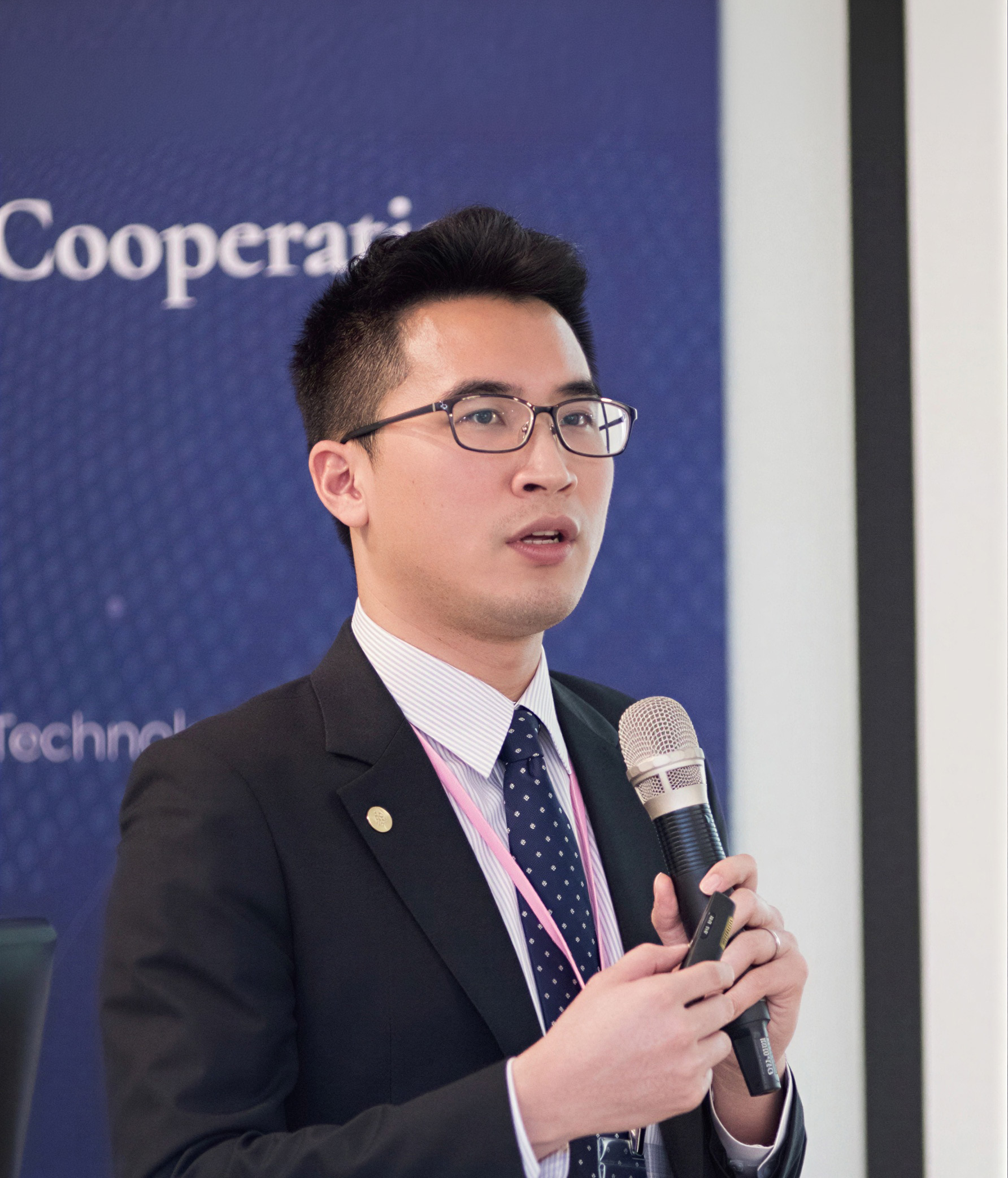
Professor Wei-Hung Chiang Seminar: “Plasma-Liquid Engineering of Zero-Dimensional Semiconductor and Metal Nanostructures”
We are pleased to invite you to a seminar by Professor Dr Wei-Hung Chiang from the Department of Chemical Engineering, National Taiwan University of Science and Technology.
Date: 25 August 2026, 14:00
Venue: Room D401 (FTMC, Saulėtekio Ave. 3, Vilnius)
Prof. Chiang’s group is a partner in the joint Lithuania-Taiwan project conducted with spectroscopists from Vilnius University and FTMC. His research focuses on non-equilibrium plasma chemistry and the synthesis of functional semiconductor nanomaterials, particularly through plasma–liquid interfaces that enable energy-efficient and low-temperature materials processing.
His group develops plasma-enabled approaches for synthesizing quantum-sized nanostructures, including graphene quantum dots, nanographene materials, carbon nanotubes, and plasmonic–semiconductor hybrid nanostructures with tunable electronic and optical properties.
A key direction of his research is the development of sustainable synthesis strategies, including plasma-enabled conversion of carbon-rich feedstocks, such as plastic waste and biomass, into functional nanocarbon semiconductors. His work aims to advance plasma-enabled approaches for bandgap engineering and electronic structure control in emerging semiconductor nanomaterials.
Abstract
“Zero-dimensional (0D) nanostructures with tunable properties are at the forefront of materials research due to their critical roles in biomedical, optoelectronic, clean energy, and sustainable engineering applications. However, synthesizing such catalysts in a rapid, controlled, low-energy-consumption, and environmentally friendly manner remains a significant challenge.
Here, we employ non-equilibrium, atmospheric-pressure microplasmas with tuned electron energies and densities to synthesize structure- and composition-controlled 0D nanostructures under ambient conditions – without the use of toxic chemicals, expensive processes, or complex vacuum technologies. The reactive species generated by the plasma not only rapidly break down precursors into small molecular fragments but also simultaneously drive the formation of crystalline domains and catalyst nucleation.
In this presentation, I will discuss plasma engineering strategies for tailoring catalyst synthesis. This work offers new insights into 0D nanostructures growth mechanisms through a renewable electricity-driven, scalable, and sustainable approach,” says Prof. Wei-Hung Chiang.
Source: FTMC