- Home
- News & Events
- Events and ads
The History of the Nobel Prize on Coins and Banknotes: A Unique Collection by Prof. E. Norkus on Display at FTMC
What do Albert Einstein, Marie Curie and thousands of historical collectibles have in common? They are all connected by the Nobel Prize and the passion of renowned Lithuanian scientist and FTMC chemist Prof. Eugenijus Norkus for preserving the history of the world's achievements.
In 1895, Swedish chemist and inventor Alfred Nobel signed his will, dedicating most of his fortune to awards for individuals whose work had brought the greatest benefit to humanity. This marked the beginning of the Nobel Prize, which for more than a century has been recognised worldwide as one of the highest honours for outstanding achievements in science, literature and peace.
However, the history of the Nobel Prize can be told not only through discoveries, scientific research and grand award ceremonies. It can also be explored through historical objects that commemorate the laureates, their achievements and the eras in which they lived.
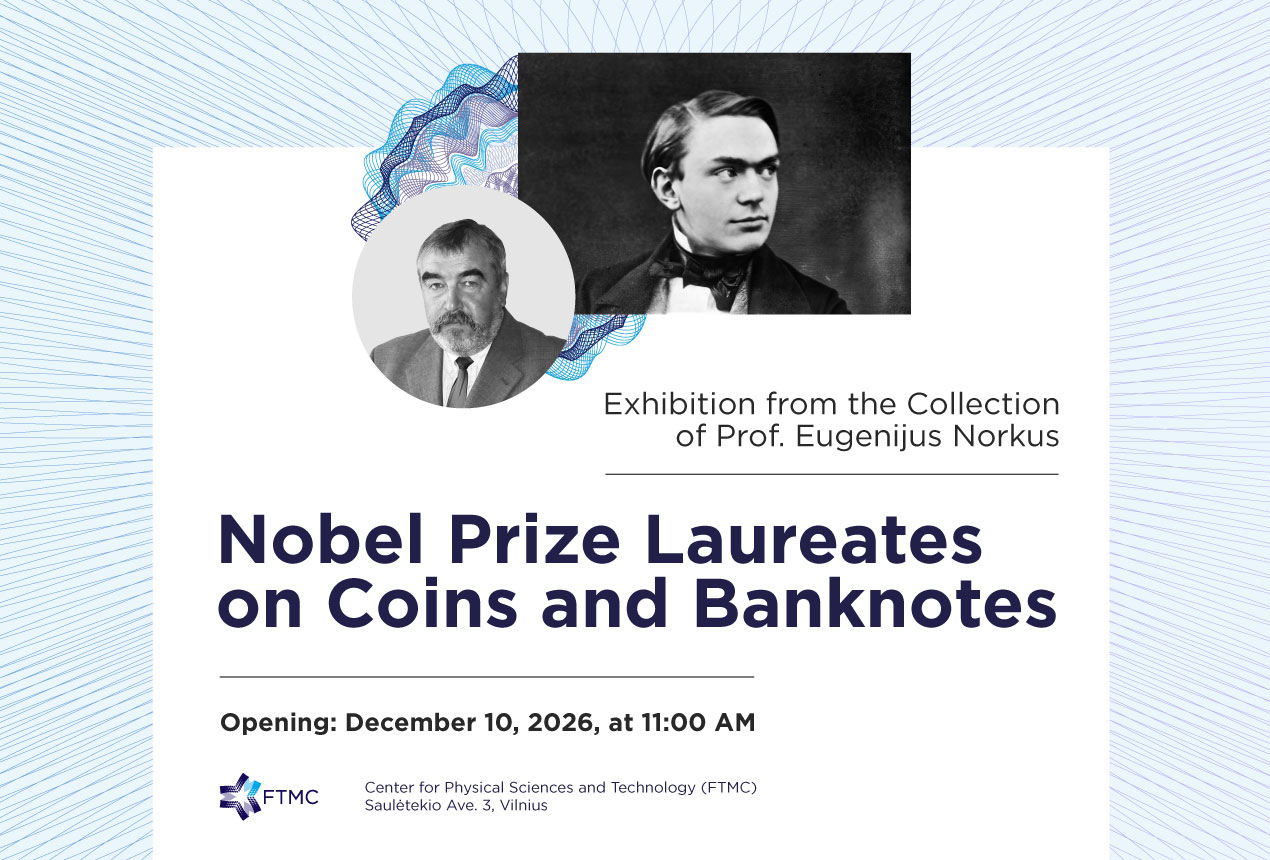
This is precisely what the exhibition “Nobel Prize Laureates on Coins and Banknotes”, opening at FTMC, offers visitors. It showcases the collection of Prof. E. Norkus, a scientist at the FTMC Department of Catalysis. The collection includes coins, banknotes and postage stamps connected with the Nobel Prize, its laureates and world history. The exhibition's opening has been symbolically scheduled for 10 December – the day on which the Nobel Prizes are traditionally awarded, commemorating the anniversary of Alfred Nobel's death.
E. Norkus's collecting journey began in childhood, when his father gave him his first coin collection. Over time, this hobby developed into a distinctive passion, and the professor began collecting various objects commemorating scientists and significant historical events. Today, his collection comprises more than 3,000 coins and over 1,000 banknotes.
According to the professor, scientists deserve to be commemorated on money because their discoveries benefit not only their contemporaries but also future generations. This idea perfectly reflects the spirit of the Nobel Prize: recognising individuals whose work changes the world and creates lasting value for humanity.
The FTMC exhibition invites visitors to explore the history of science and human achievement from a different perspective – through objects carefully selected by a collector, each telling a story of remarkable individuals, their discoveries and the progress of humanity.
The exhibition opening will take place on 10 December 2026. The exhibition will be open to visitors at FTMC, Saulėtekio Ave. 3, Vilnius.