- Home
- News & Events
- News
A Technology You Can’t Hide From: FTMC Scientists Successfully Test a Marine Radar Identification System at Sea
The FTMC team has developed and successfully demonstrated in the Baltic Sea a system capable of detecting ship radar signals. Initial trials have delivered positive results, and the technology is expected to become a reliable tool for detecting and identifying vessels attempting to conceal or falsify their identity.
Deceptive Signals Exist at Sea Too
Just as road users must follow clear traffic rules, so too do seafarers. One of these rules is particularly relevant to the technology discussed here.
Every vessel is required to use the Automatic Identification System (AIS), which operates via radio communication. Every few seconds, AIS transmits messages to other ships, coastal stations and even satellites, providing information about the vessel’s name, type, precise position, course and speed. This system is essential for safety purposes: preventing collisions at sea, requesting assistance, and enabling states to monitor sea lanes and traffic flows. It also allows authorities to identify those responsible in the event of violations.
However, a vessel’s crew – acting under the influence of hostile states – may simply switch off AIS or transmit false signals. This practice is considered one of the tools of hybrid warfare.
How can such threats be countered? A team of scientists from the FTMC Microwave Laboratory, led by physicist Dr Paulius Ragulis, has developed a system designed to help identify such deception. Its full name is the Radar Electromagnetic Signature Detection and Analysis System, and its purpose is to detect ship radar signals and use them to identify a vessel’s true identity, even when other available sensors provide contradictory information.
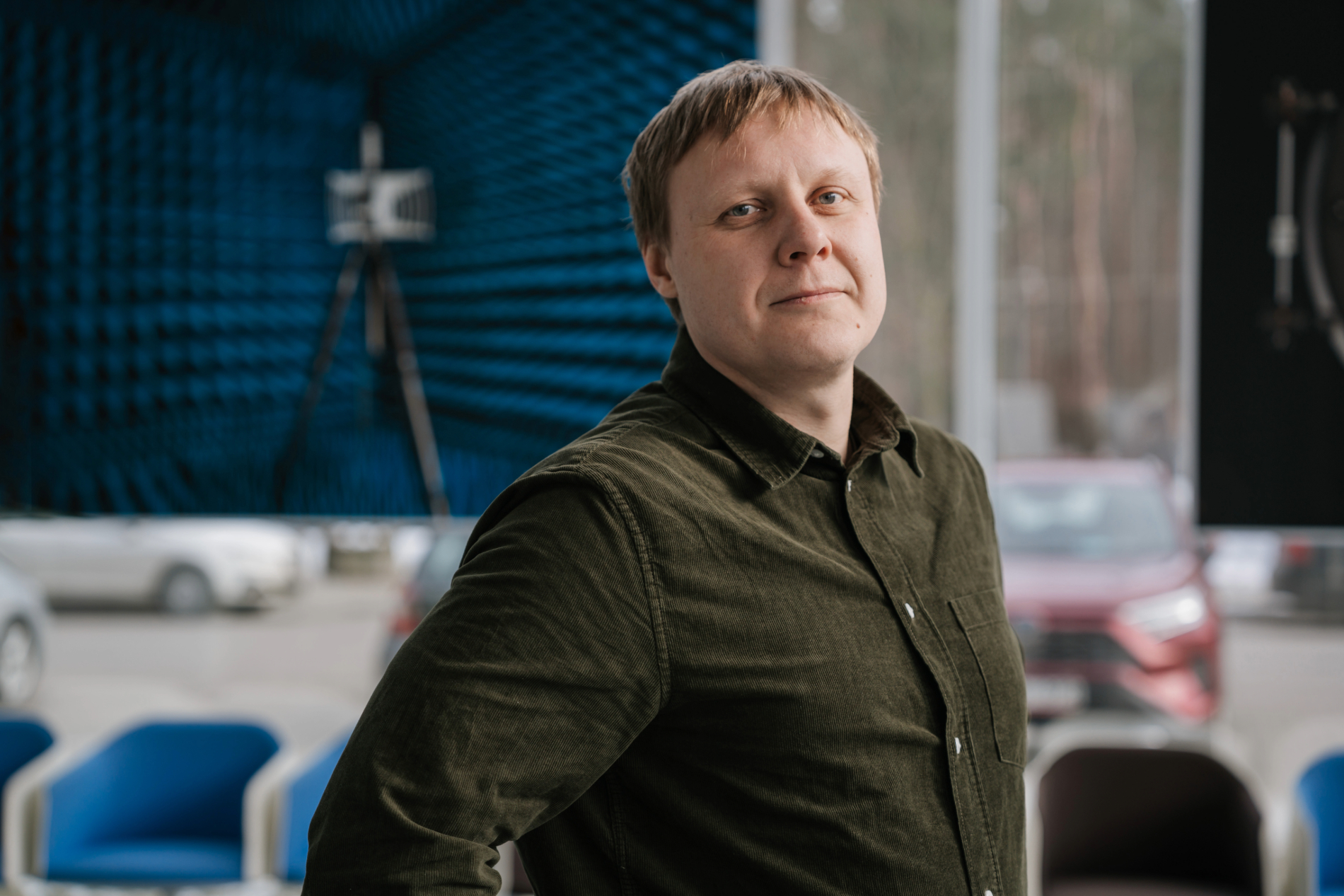
(Dr Paulius Ragulis. Photo: Judita Vadeikė / FTMC)
Detectable Traces
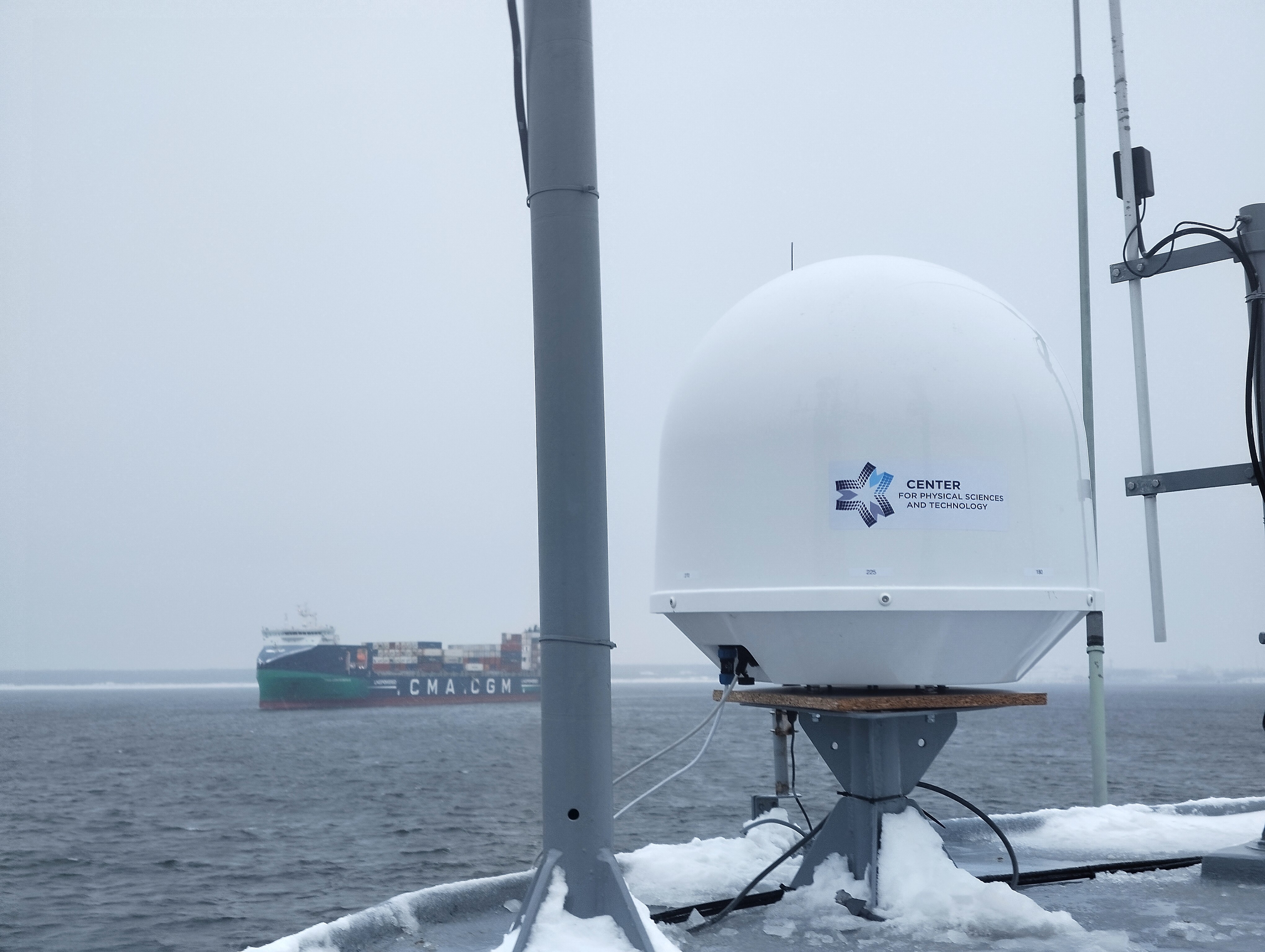
The system was developed over a three-year period as part of a project commissioned by the Lithuanian Navy and approved by the Ministry of National Defence of Lithuania. Externally, the system appears as a white radome; inside it (which, for understandable reasons, cannot be shown here) are directional antennas, computer equipment, an electromagnetic spectrum analyser, and other instruments.
“All ships are equipped with radars that emit electromagnetic radiation in the microwave frequency range. These radars detect obstacles at sea and are therefore essential for navigation safety. Inevitably, this means that radars leave behind what we call an electromagnetic footprint in the environment. Our system passively detects these footprints and ‘collects’ the radiation. Once a radar signal is captured, a trained AI system is applied, and the computer screen then displays the vessel’s name along with a probability rating indicating the reliability of that identification,” explains Dr Ragulis.
For example, the display might read: ‘Black Widow, 93%’, and so on.
According to the FTMC physicist, if a signal from a previously unknown vessel is received (the AI continues to gather data and learn), a Plan B is triggered: the system presents a parametric visualisation of the signal – a diagram – allowing the operator to determine what type of radar the data may originate from.
“Therefore, even if an enemy were to transmit a false AIS message, we would still be able to see that it is in fact a completely different vessel,” says the scientist, adding that the system would be useful both for peacetime maritime traffic monitoring and in situations involving hybrid attacks, crises or war.
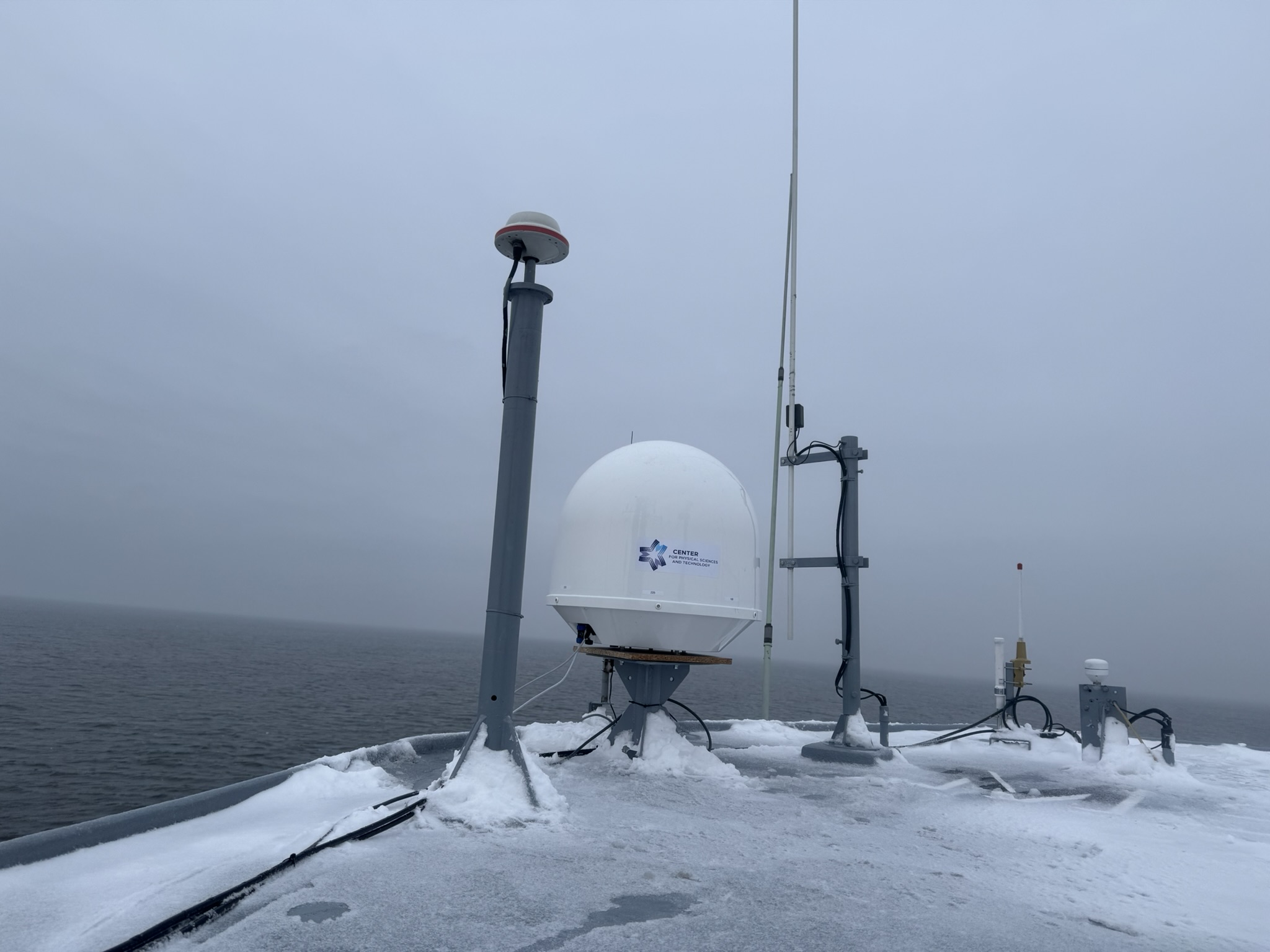
(Photo: FTMC)
A Successful Start in the Baltic Sea
On 27 January 2026, the FTMC-developed prototype was tested under real-world conditions in the Baltic Sea for the first time. The system was installed aboard the Lithuanian Navy’s mine countermeasures vessel M53 Skalvis. Conditions were truly wintry and maritime, with strong winds, snow and heavy seas. Nevertheless, according to Dr Ragulis, the system withstood everything exceptionally well:
“As we were concluding the project, we wanted to demonstrate the prototype to the Defence Resources Agency under the Ministry of National Defence and to the Navy itself. The results were very good – better than we ourselves expected. We were impressed by the accuracy of the parameters displayed by our system. The vessel identification distances were satisfactory. Our data matched AIS signals from ships, as well as information about vessels that were not transmitting AIS but were identified by other means.”
The head of the FTMC Microwave Laboratory notes that the system will continue to be improved, with the main goal being to transform the prototype into a practical and reliable tool for naval forces.
“We hope that cooperation with the Navy will continue to strengthen and that we will be able to further develop the technology. This work not only gives our scientists great motivation, but also provides tangible benefits to the Armed Forces in addressing contemporary challenges,” says the physicist.
“Looking further into the future, we also have ideas for applying our system to drone detection. Every drone emits communication signals that we can capture, process and use to determine what type of unmanned aerial vehicle it is (or at least which protocols it uses), or the direction from which it is flying. But for now, our full focus remains on the sea and on strengthening our naval capabilities,” adds Dr Ragulis.
Written by Simonas Bendžius, FTMC Public Relations and Communication Specialist
The project is being developed under the Defence Technology Development Programme in Lithuania for 2021–2027, funded by the Ministry of National Defence. The programme’s objective is to strengthen national defence capabilities and accelerate the development of Lithuania’s defence industry.