- Home
- News & Events
- News
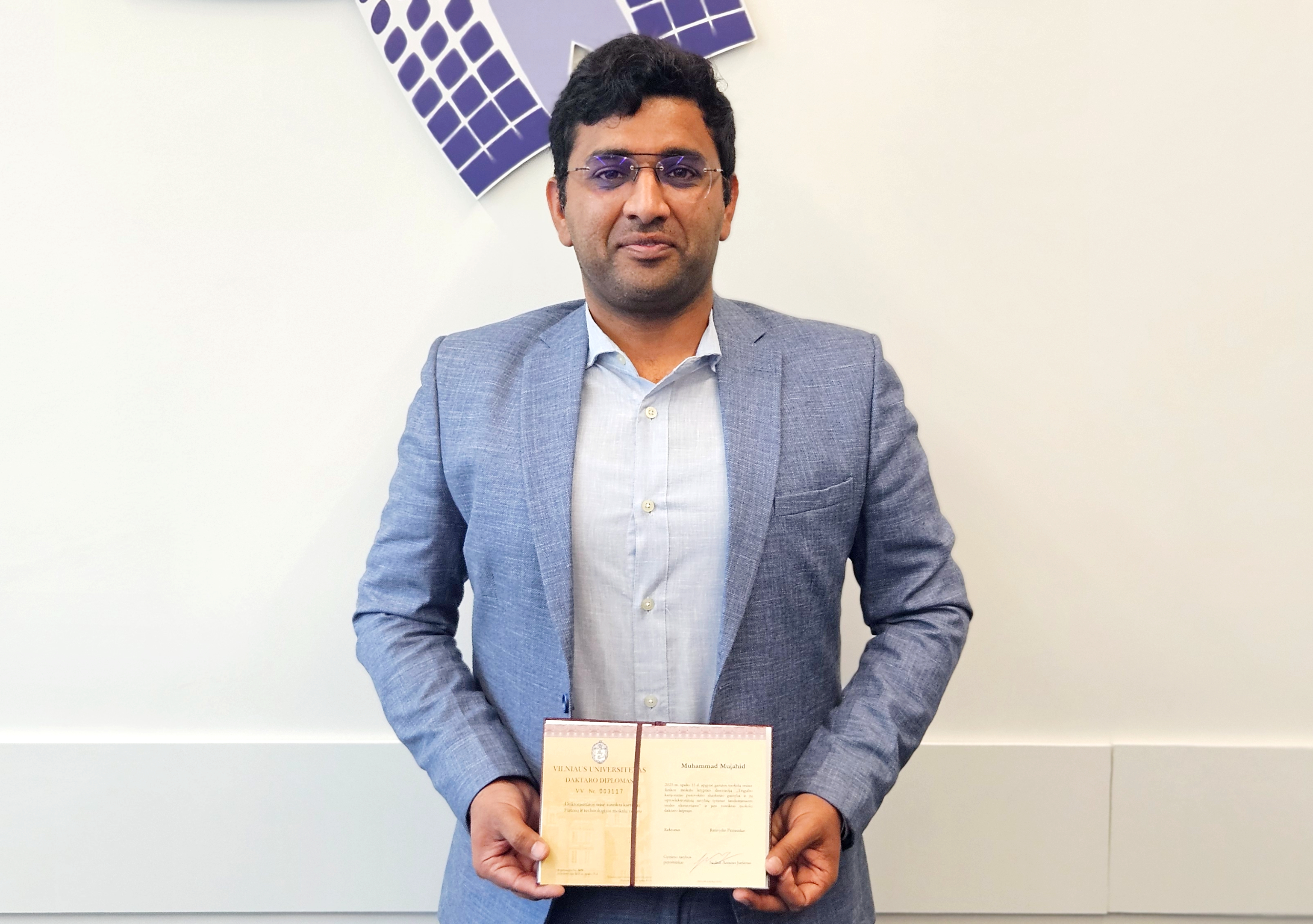
Advancing Perovskite Solar Cells: Muhammad Mujahid Earns His PhD
How can solar cells become more accessible to everyone? Scientists around the world are seeking the answer – and FTMC has also taken a step towards a deeper understanding.
On 15 October, physicist Muhammad Mujahid successfully defended his doctoral dissertation. His research topic was “Triple Cation Perovskite Layer Fabrication and Investigation of their Optoelectronic Properties for Tandem Solar Cells” (academic supervisor: Prof. Habil. Dr Steponas Ašmontas from the FTMC Laboratory of Electronic Processes).
We warmly congratulate our colleague and wish him continued success in his scientific career!
The physicist explored how to harvest more electrical energy from sunlight using perovskite solar cells. Perovskites are a type of crystalline material that scientists hope could replace conventional silicon in solar cells, making solar energy cheaper, more efficient, and easier to integrate into everyday life. For example, perovskites can be produced as thin layers on flexible surfaces such as windows, clothing, and other materials.
However, there is still a long way to go before perovskite solar cells are widely used. The main challenges concern their stability, resistance to environmental effects, and other key factors. Muhammad’s work aims to contribute to overcoming these challenges.
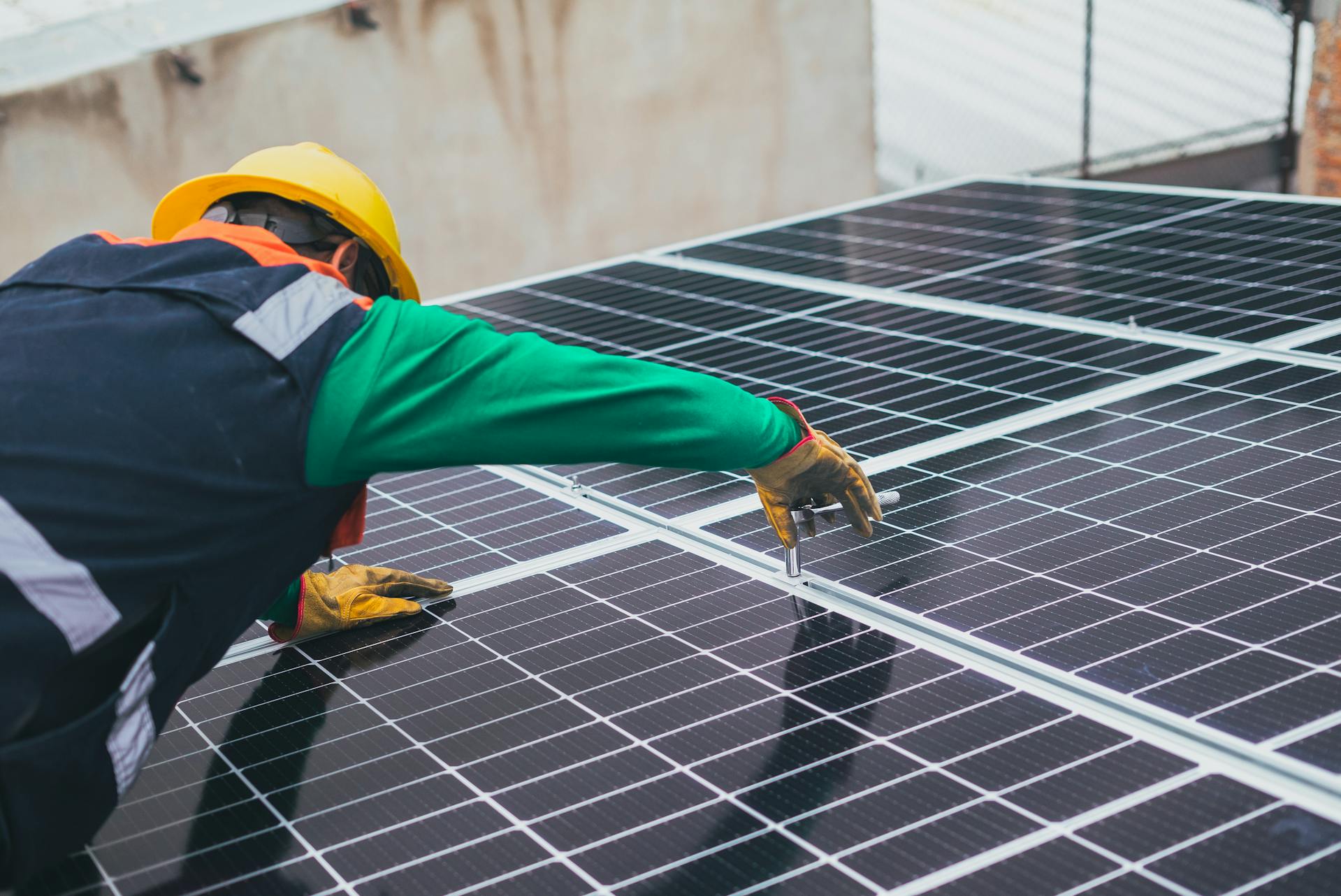
(Photo: Pexels.com)
Simply put, in the first part of his research, the physicist demonstrated that when a perovskite solar cell is illuminated with very short laser pulses, the resulting electrical voltage consists of two parts. One part appears immediately because the laser light briefly “heats up” the charge carriers inside the material. The second part forms more slowly – this is the usual solar voltage that arises when light generates electrons and holes, which together produce electricity.
In the second part, Mujahid presented the operation of his two-layer solar cell: the upper, semi-transparent perovskite cell, and the lower silicon cell. These two cells work together as a team – the upper layer captures part of the sunlight, while the remaining light passes through to the silicon cell beneath.
This combination generates more electricity overall, achieving an efficiency of about 26.6% – higher than either cell could produce alone. According to the physicist, this demonstrates that multi-junction solar cells incorporating a perovskite layer can outperform single-layer designs and make better use of sunlight.
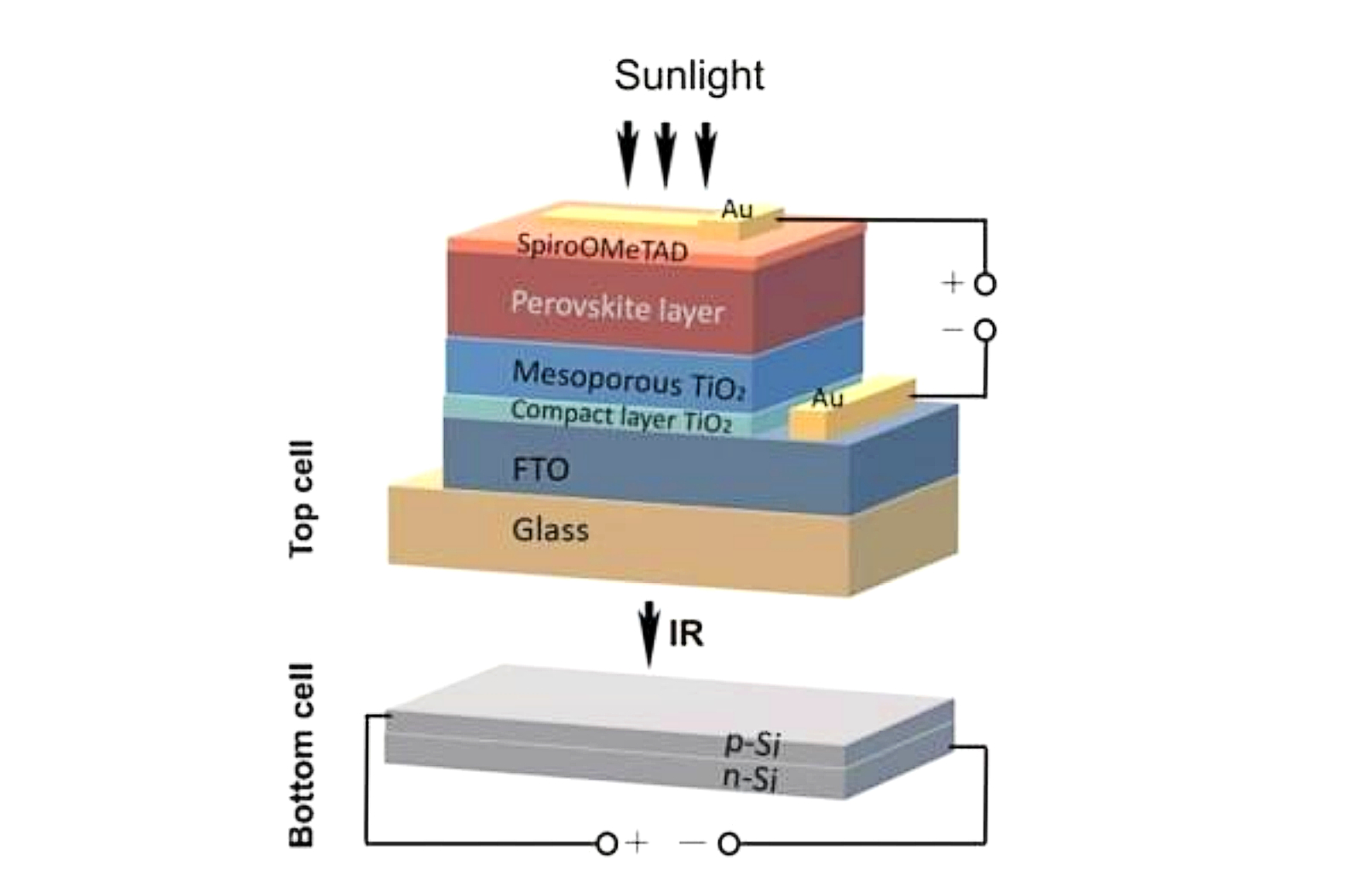
(Design of a triple-cation perovskite/silicon multi-junction solar cell. The grey silicon cell forms the bottom layer. Illustration from Dr Muhammad Mujahid’s doctoral dissertation)
“Higher efficiency lowers the cost per watt and harvests more energy from rooftops, apartments, factories, and carports, exactly where space is tight. Semi-transparent perovskites make it easier to embed photovoltaics into windows and facades, turning city buildings into quiet power plants without sacrificing natural light, a big win for dense urban areas.
These improvements accelerate decarbonization, reduce imported-fuel dependence, and create skilled jobs across manufacturing, installation, and maintenance; recent global analyses also show renewables outcompeting fossil fuels on cost at scale, reinforcing the economic case alongside the climate and health benefits,” says Dr Mujahid.
You can read the dissertation by following this link
Info: FTMC