- Home
- News & Events
- News
At FTMC Innovation Forum “I³ FTMC: Idea. Innovation. Impact” – Technological Breakthroughs, the Courage to Experiment and the Value of Failure
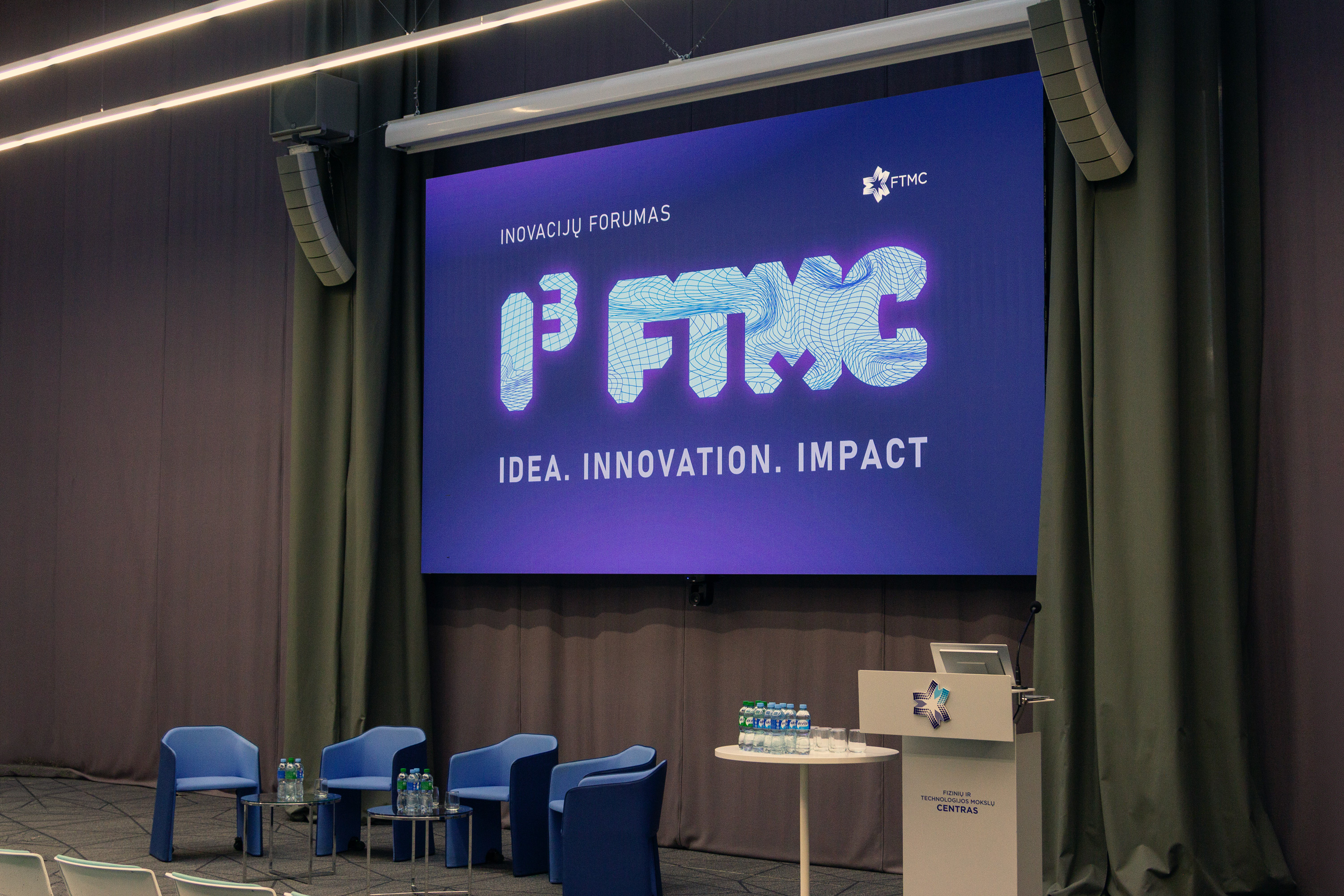
How does a scientific idea become a technology, and how does that technology turn into a product on the market? What does it take for an innovation to create real value? And why can even failures become an important step forward? These were among the questions explored on 25 November at the innovation forum “I³ FTMC: Idea. Innovation. Impact”, held at the Center for Physical Sciences and Technology (FTMC), which brought together representatives of the scientific, business and investment communities.
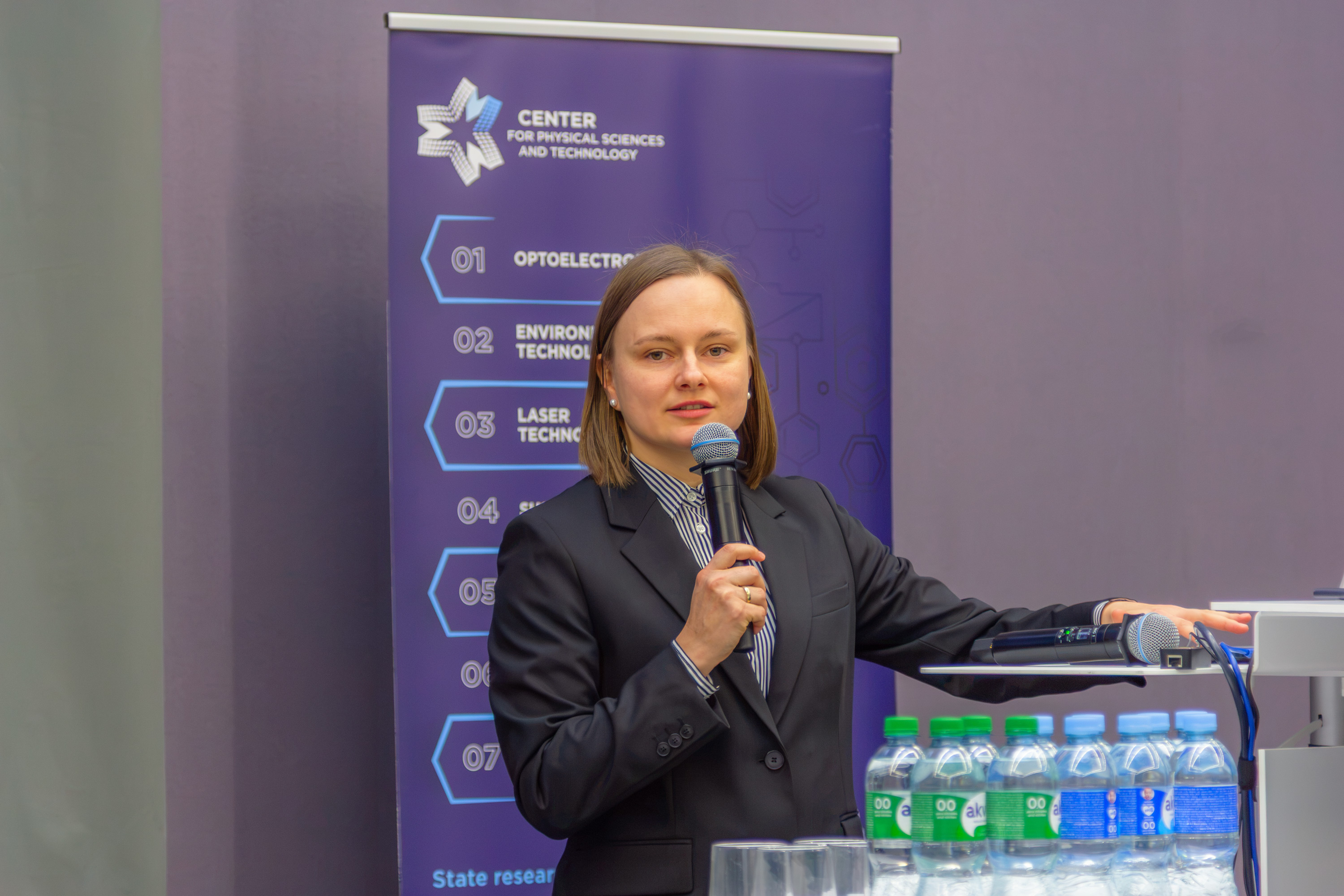
The three elements encoded in the forum’s title – idea, innovation and impact – reflected the central message of the event: a good scientific idea is only the beginning. Turning it into an innovation and bringing it to market requires collaboration between people from different fields. “We want to bring these areas together in one discussion – to show not only how scientists develop new technologies, but also how their ideas become innovations and, ultimately, solutions that create a real impact,” explained Romuald Eimont, Head of the FTMC Innovation Department and one of the forum’s organisers.
Ideas That Can Shape the Future
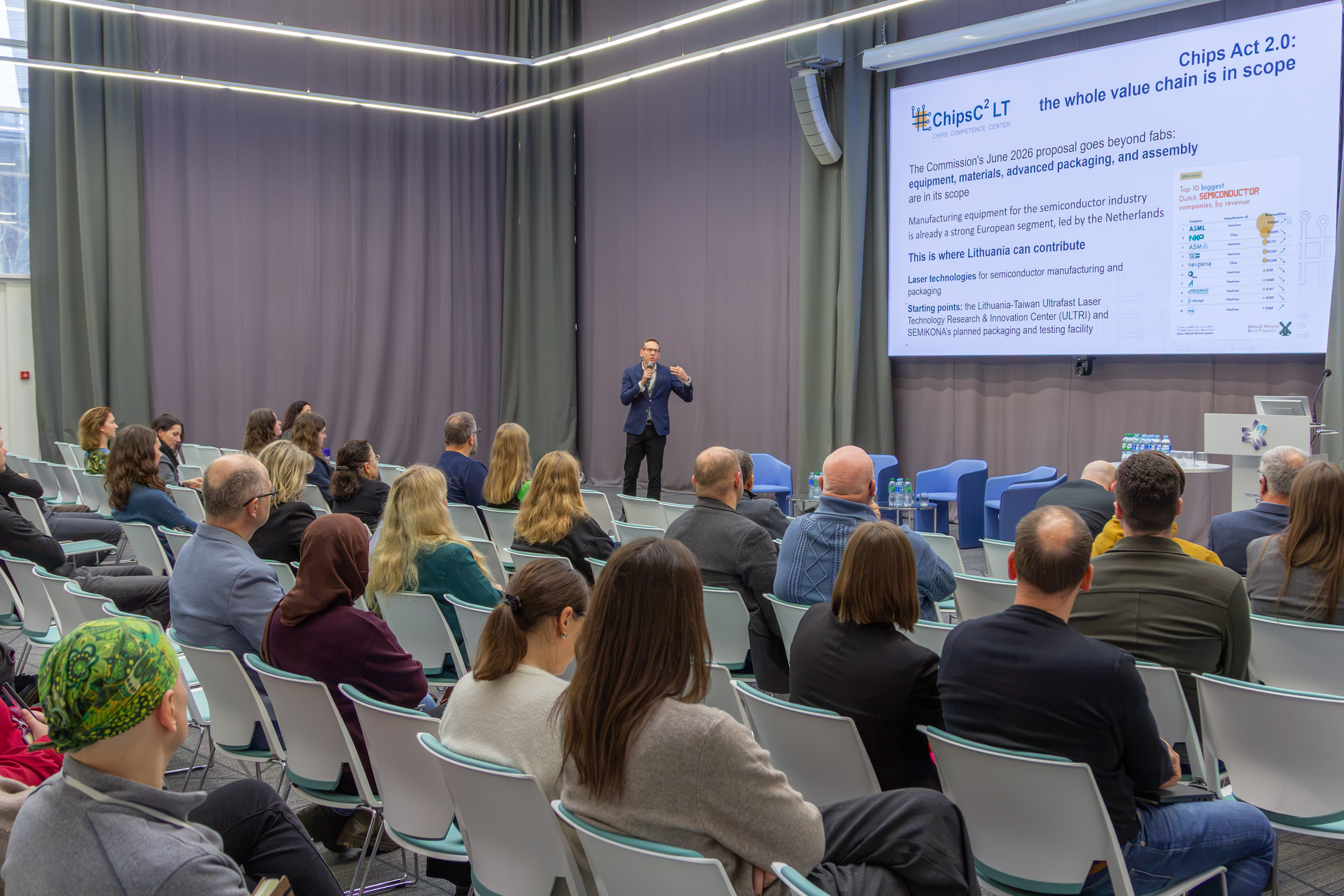
The first part of the forum, Idea, focused on scientific ideas and their potential. Speakers presented the latest research, discussed collaboration between physical and life sciences, the potential of terahertz sensors, and Lithuania’s expertise in the field of semiconductors.
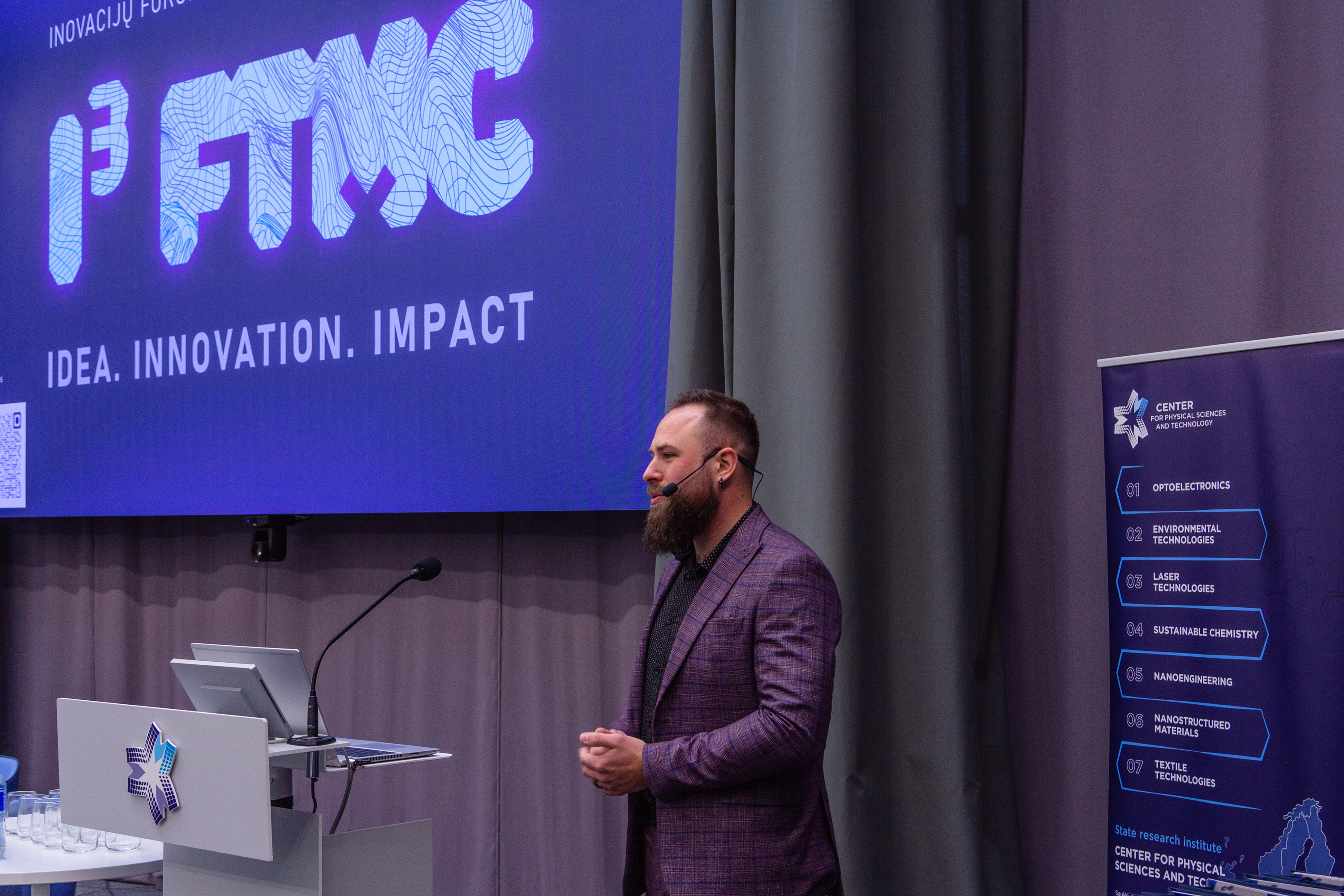
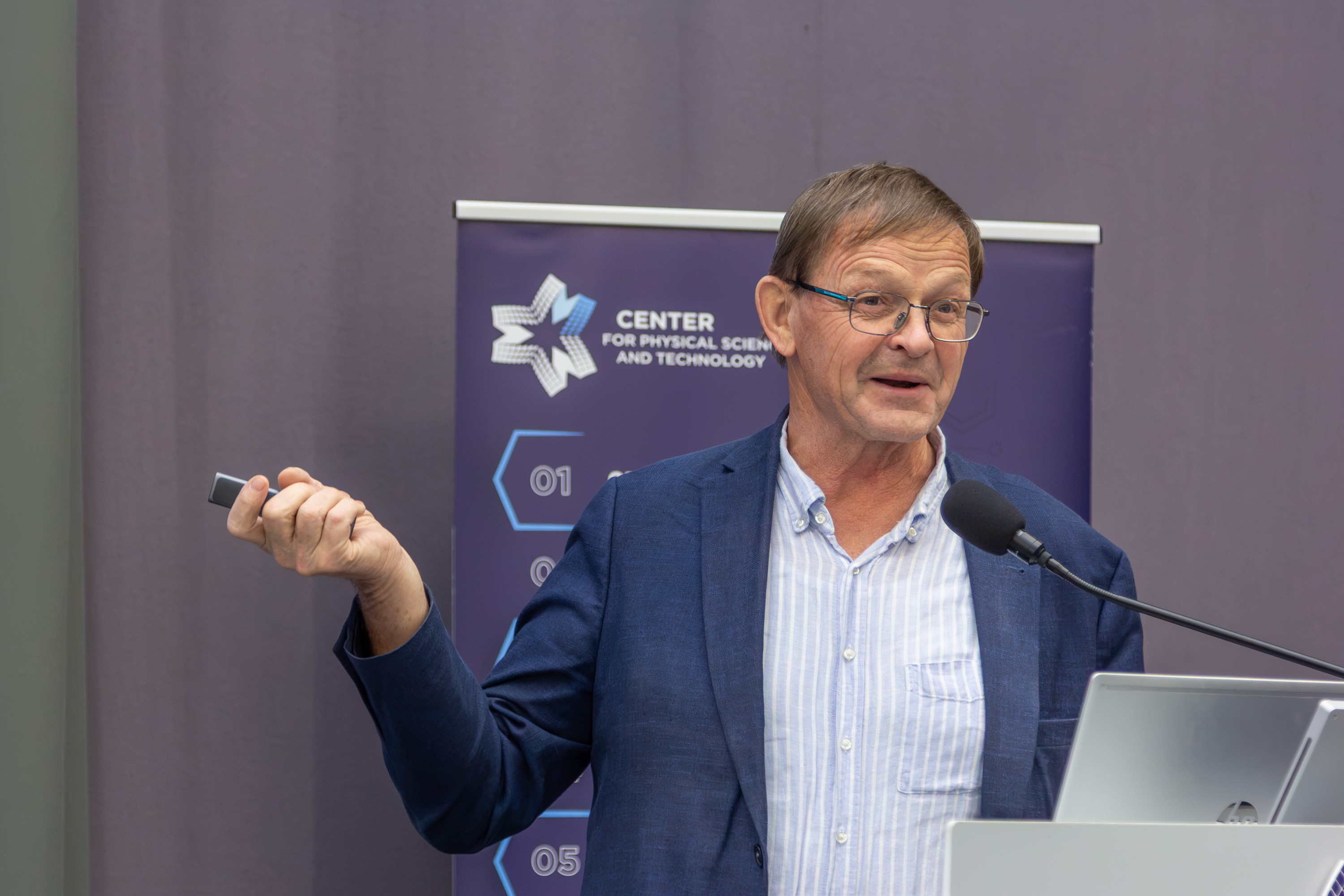
The second part, Innovation, shifted the focus to the practical implementation of these ideas. Gediminas Račiukaitis, Head of the FTMC Laser Technologies Department, reminded the audience that scientists’ ambitions should extend beyond generating new knowledge. It is equally important to consider how to protect research through patents, apply it in practice and bring it to international markets.
“The purpose of science is to address international and national needs. We need to think about what Lithuania needs and how FTMC contributes to building a safe, green, healthy and, above all, smart country,” said G. Račiukaitis. He also pointed out that Lithuania’s domestic market is relatively small, which makes it essential to think globally when developing new technologies.
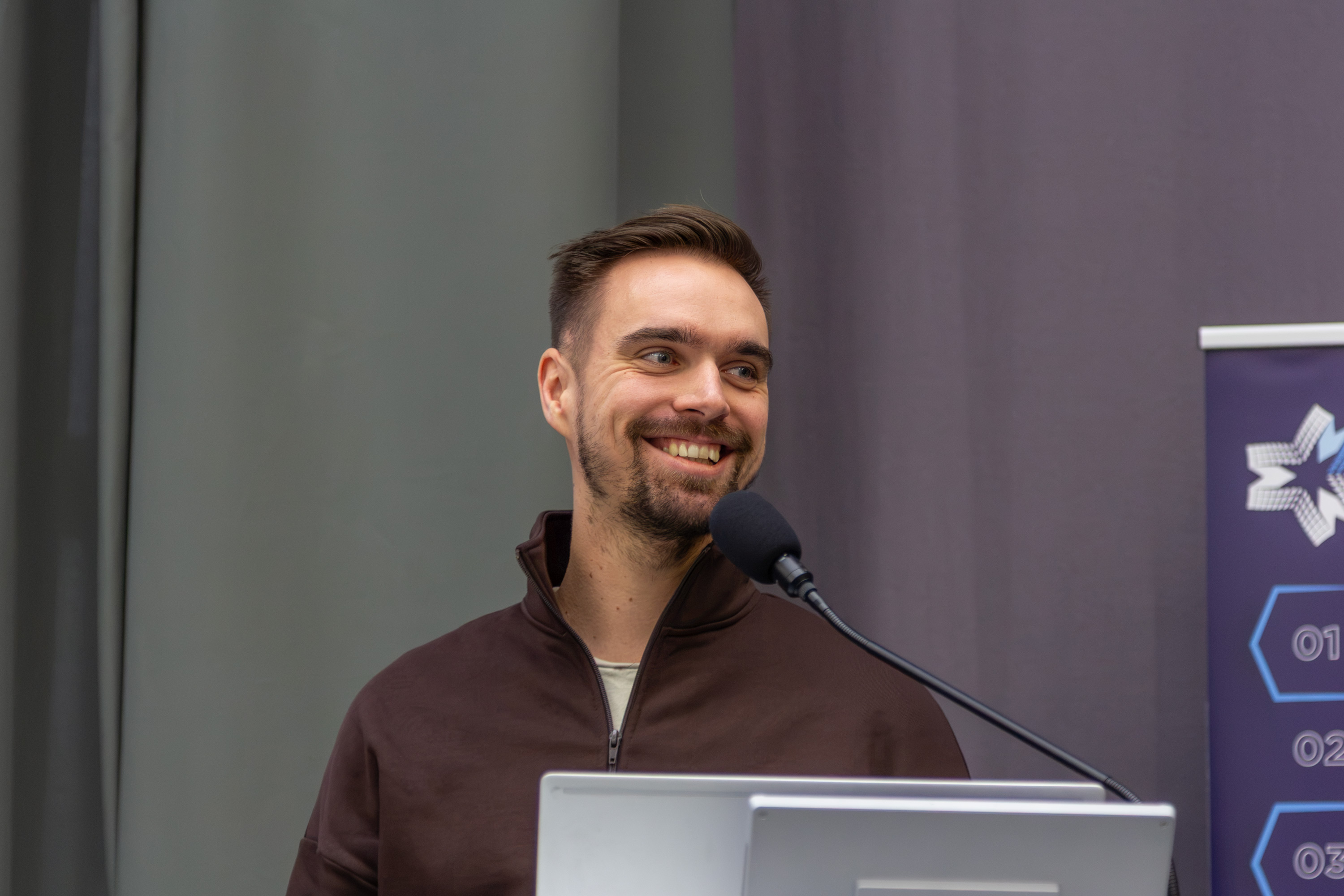
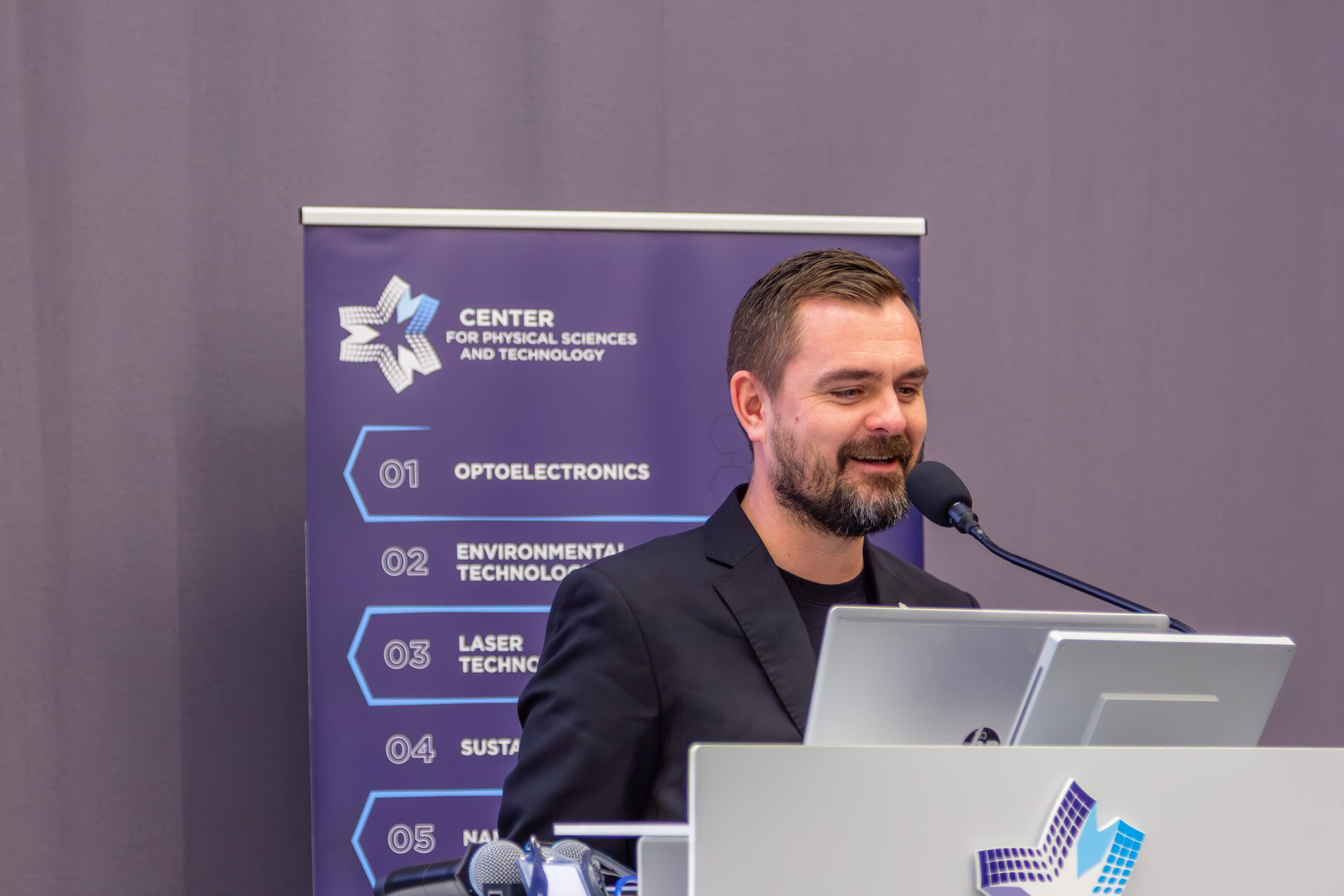
Eimantas Zopelis, Head of “Diodela”, shared how scientific knowledge can become the foundation of a business. While still a student, he worked at several companies and identified a gap in the market – this marked the beginning of his business in the trade of crystal components. In 2020, with the support of FTMC, E. Zopelis founded “Diodela”. The company got off to a successful start: it sold its first laser within just three months and entered the German market in 2023.
However, according to the entrepreneur, behind this growth story lies a considerable amount of trial and error. “Success often comes after major failures. Every project brings experience, partnerships and trust – even when things don't work out, they can lead to new projects,” E. Zopelis explained.
Space Research – Innovation for Earth
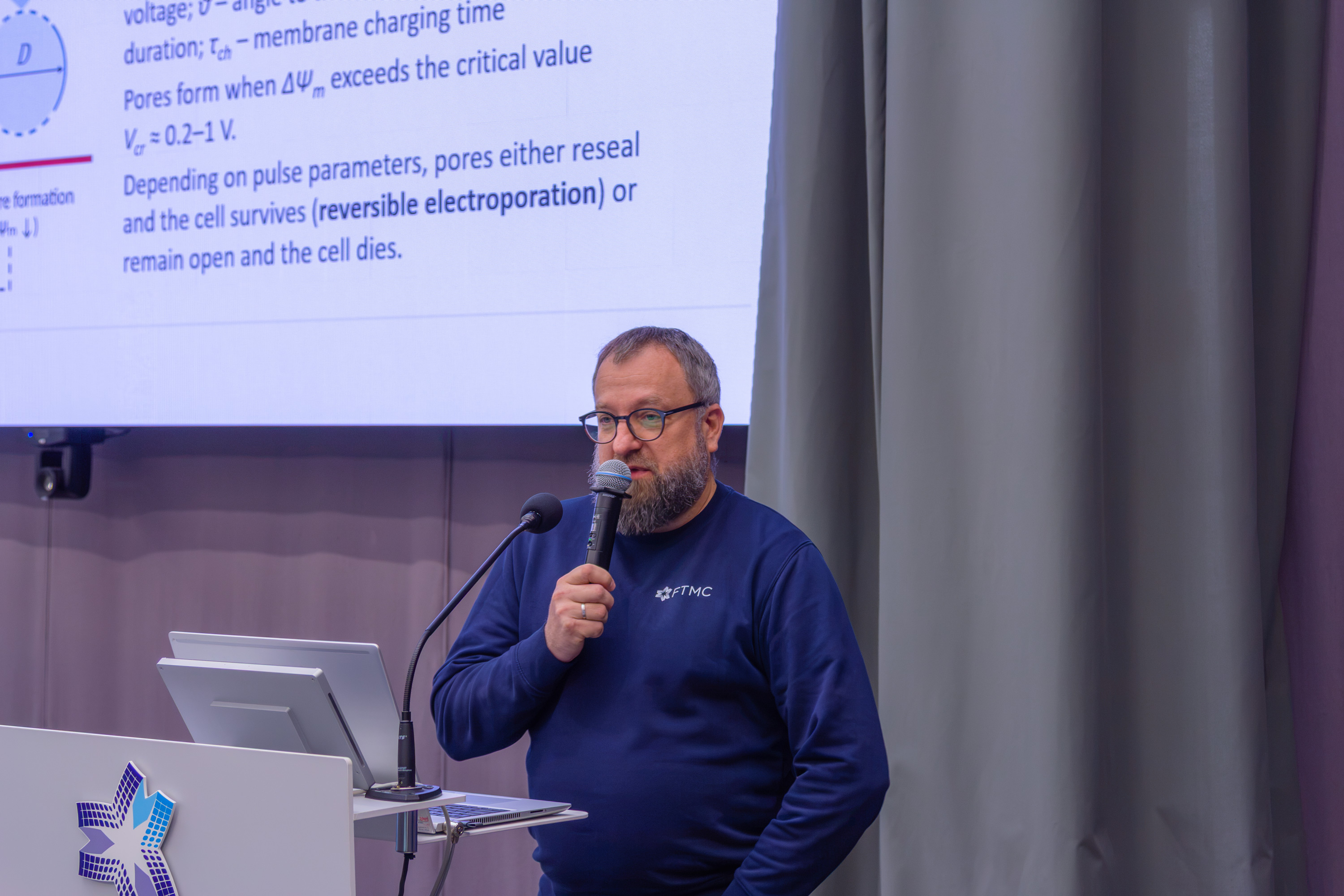
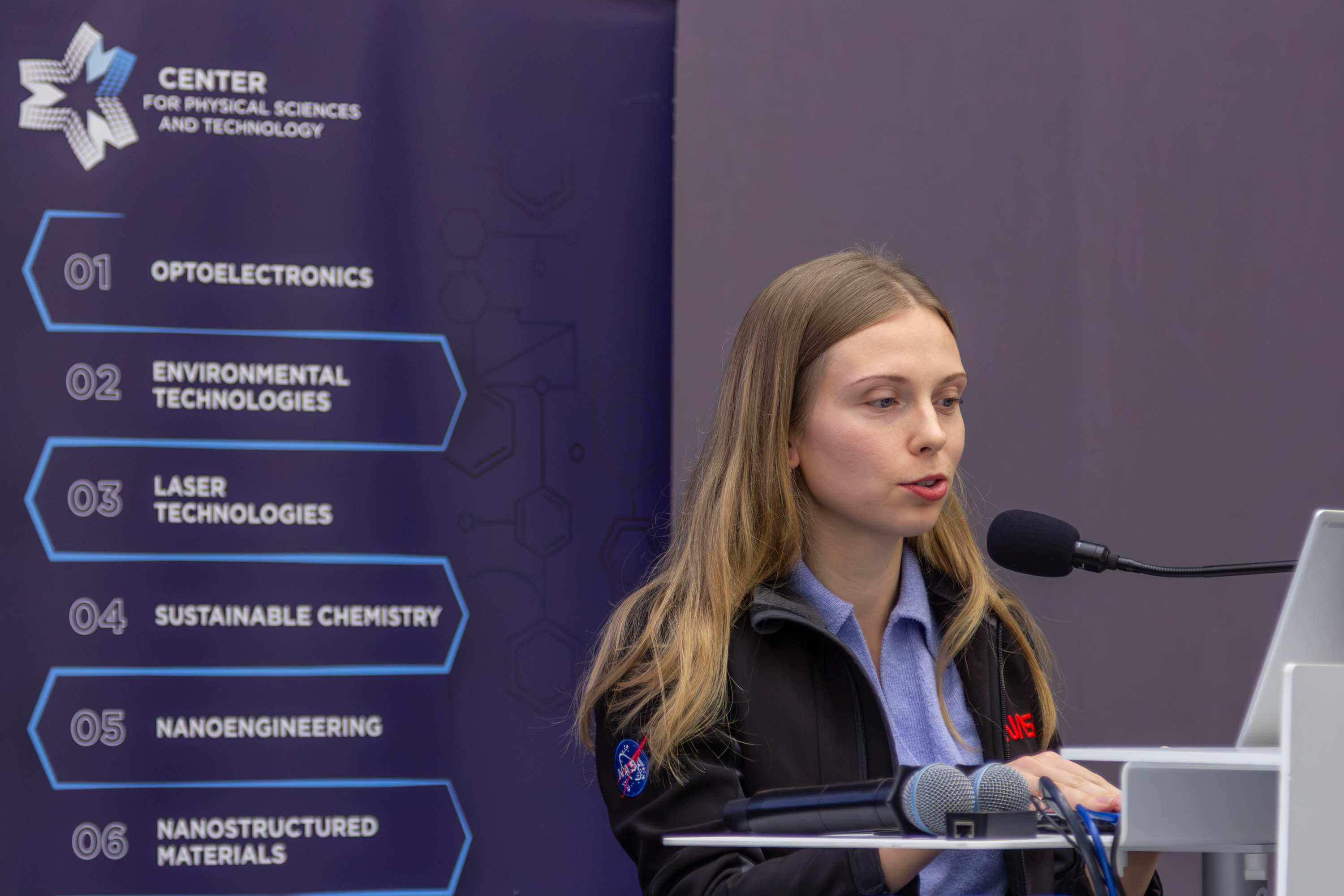
The potential of technology was also explored in a very different setting – space. Goda Mažeikaitė, a scientist at “Delta Biosciences”, presented research aimed at understanding how space radiation affects chemical substances and medicines.
In collaboration with FTMC scientists, the company is preparing experiments to investigate how cosmic radiation affects the stability of various chemical substances and medicines. Around one hundred different molecules are planned to be sent to the International Space Station (ISS), including compounds developed by the company, those proposed by its partners, and widely used pharmaceutical substances. The experiment will make it possible to assess how they change under real space conditions.
Such research is important not only for future space missions. A better understanding of how radiation affects the stability and effectiveness of medicines could also have practical applications on Earth – for example, in finding ways to extend the shelf life of medicines or improve their storage conditions.
A Working Technology Does Not Guarantee Business Success
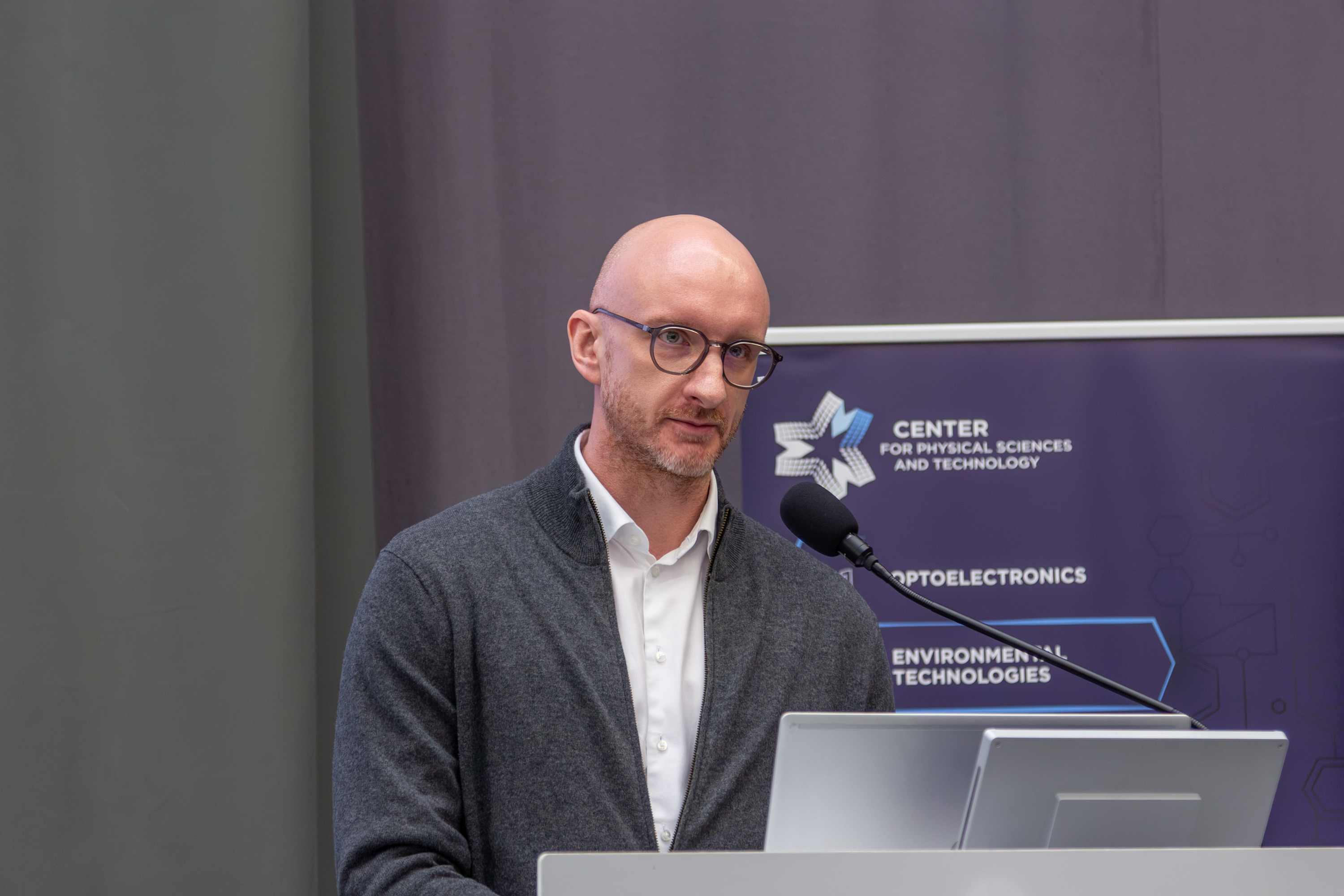
The third part of the forum, Impact, explored what happens when a technology leaves the laboratory: market needs, investment and real-world applications. Andrius Milinavičius, General Partner at “BSV Ventures”, emphasised that having a working technological solution does not necessarily mean that a successful business has been created.
“The technology works. To a scientist, this may look like the finish line. To us, it looks like the starting point – the moment when all the hard work begins,” said A. Milinavičius.
According to him, creating a successful start-up takes more than just technology. It requires a clearly defined problem that the technology solves, market demand, a strong team and capital. For investors, one of the most important factors is precisely the team’s ability to turn an idea into a viable business.
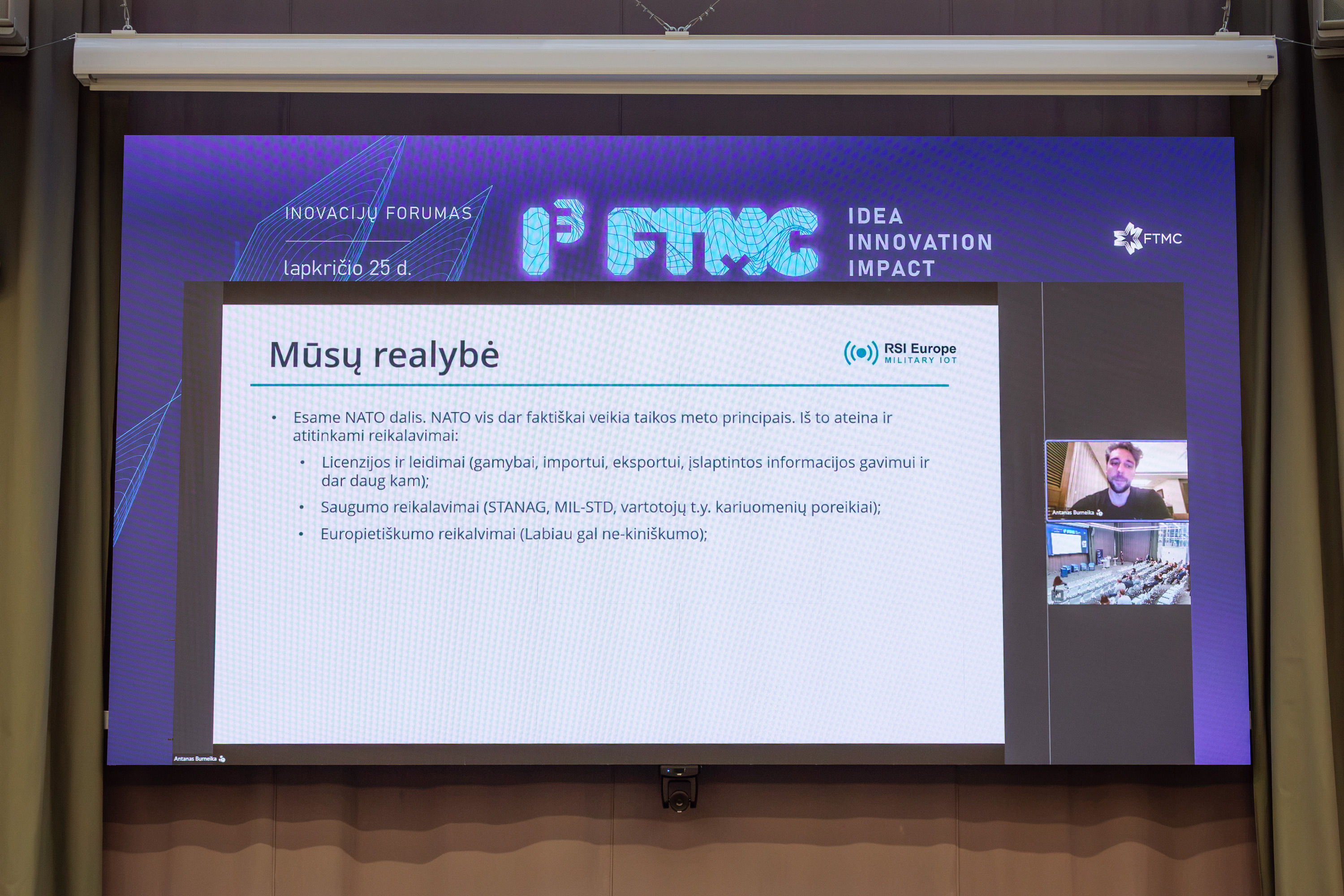
Meanwhile, Antanas Burneika, representing “RSI Europe”, spoke to forum participants about the specific challenges of developing military technologies, the numerous standards that must be met, and the differences between the Lithuanian and Ukrainian defence industry contexts.
Failures Worth Talking About
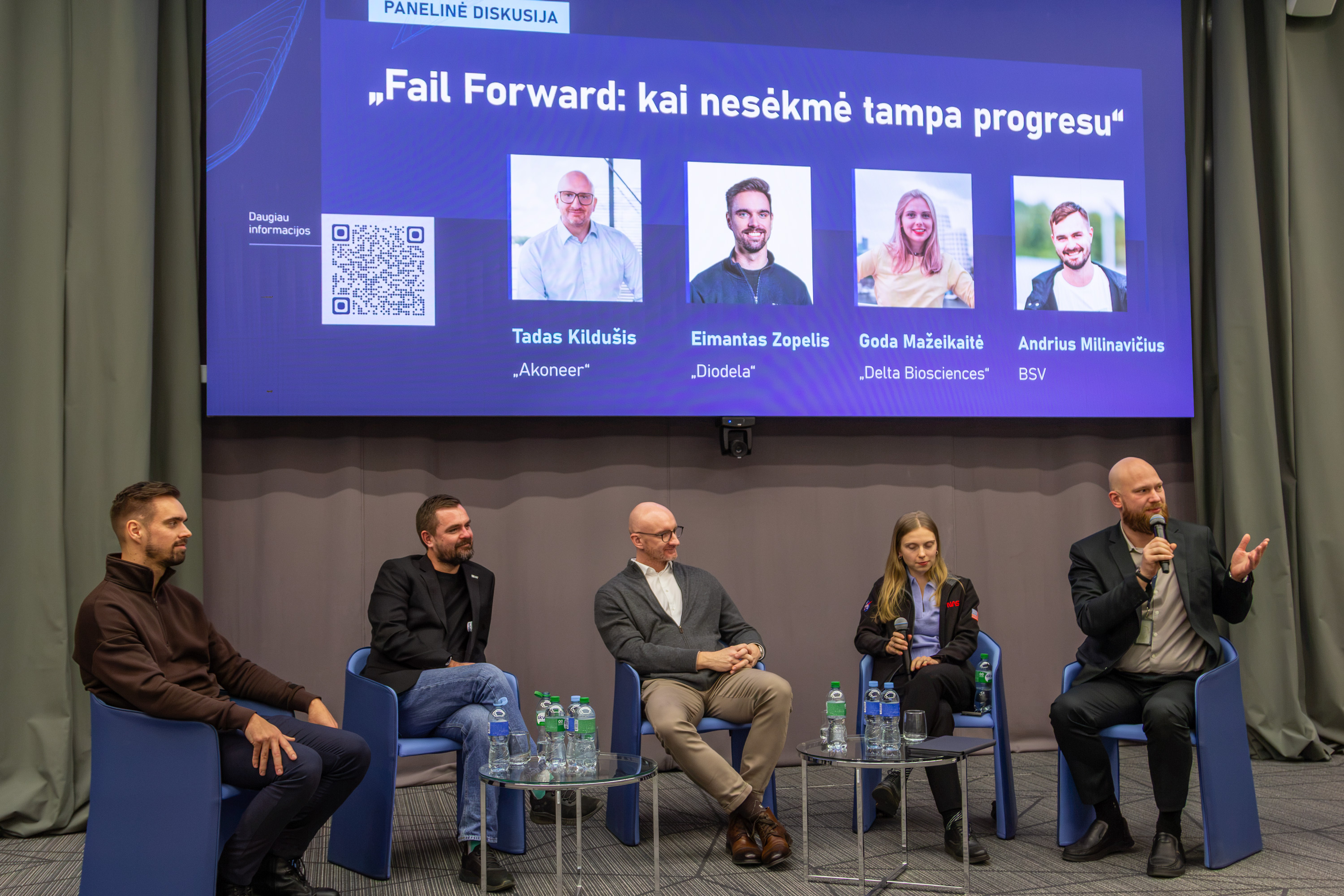
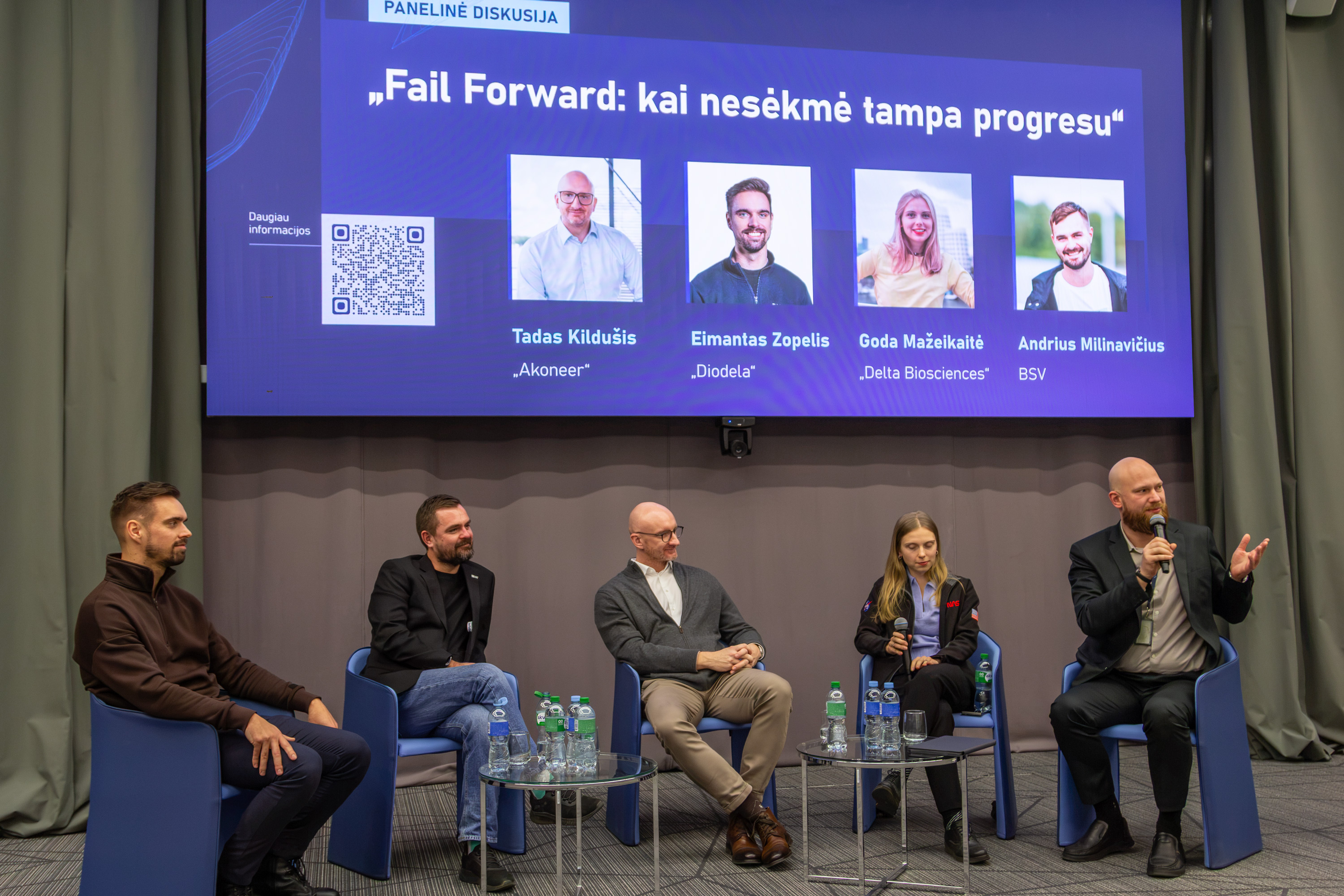
The forum concluded with a panel discussion entitled “Fail Forward: When Failure Becomes Progress”, featuring Tadas Kildušis (“AKONEER”), E. Zopelis (“Diodela”), G. Mažeikaitė (“Delta Biosciences”) and A. Milinavičius (“BSV Ventures”). They discussed business challenges, failures they had experienced and the fears that often remain hidden behind success stories.
The panellists spoke openly about projects that had not gone as planned, difficult decisions and the uncertainty that comes with developing new technologies or building a business. They emphasised that fear and doubt are entirely natural parts of the process. What matters is not whether we can avoid failure, but what we learn from it and how we move forward.
Sometimes an unsuccessful project becomes a valuable learning experience, sometimes it marks the beginning of a new partnership, and sometimes it encourages us to look for an entirely different solution. This is precisely the idea behind the discussion title, Fail Forward: failure does not necessarily bring progress to a halt – it can actually drive it forward.
When Science and Business Work Together
The “I³ FTMC: Idea. Innovation. Impact” forum once again demonstrated that the journey from a scientific idea to a product on the market requires much more than a great discovery. It takes ambition, the ability to identify market needs, investment, a strong team and partners willing to overcome challenges together.
The event organised by FTMC provided an opportunity not only to hear different perspectives and experiences from scientists, business representatives and investors, but also to establish new connections, showcase technologies and explore opportunities for joint projects. During the breaks, participants were also invited to visit the exhibition area, where companies and organisations presented the solutions and technologies they are developing, as well as their activities. This offered another opportunity to connect directly, exchange ideas and identify potential areas for collaboration.