- Home
- News & Events
- News
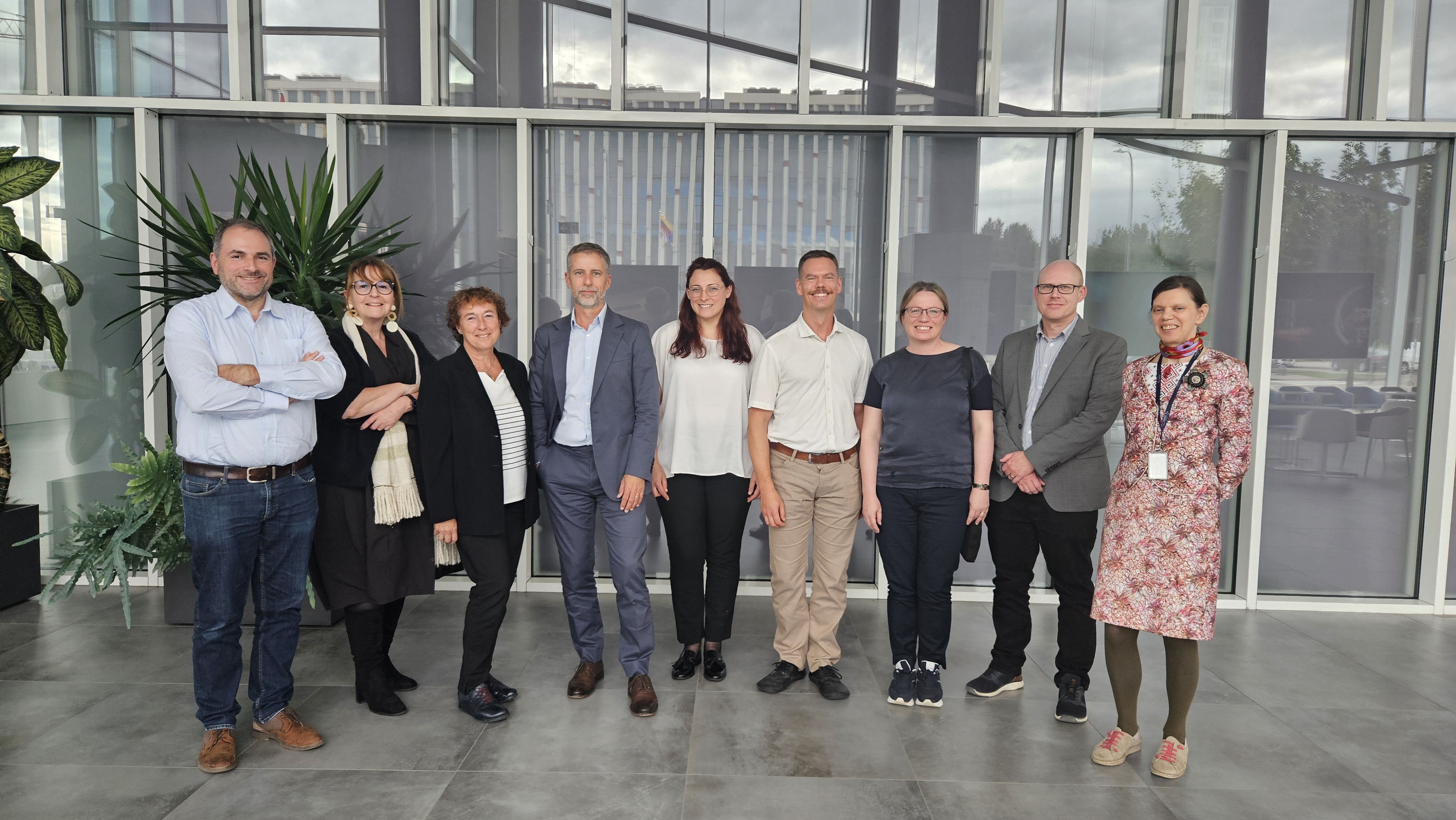
EARTO Working Group Emerging Technologies for Healthcare Meets at FTMC
On 23–24 September, FTMC hosted a meeting of the EARTO Working Group Emerging Technologies for Healthcare. EARTO (the European Association of Research and Technology Organisations) brings together 350 RTOs from 32 countries.
FTMC joined this association in 2019; in the mentioned WG Emerging Technologies for Healthcare, our Center is represented by chemist Dr Rasa Pauliukaitė from the Department of Nanoengineering.
The WG meets twice a year in hybrid format at different RTOs, where it discusses the most pressing issues concerning the need for programmes dedicated to health technologies in Europe. EARTO also plays an advisory role to the European Commission in the development of research programmes and topics.
“Although the technologies discussed are related to healthcare applications, our group is interdisciplinary: it includes physicists, chemists, biologists, doctors, biotechnologists, and project managers from RTOs. We are also aware that in the field of health, technologies such as quantum, laser, semiconductor, and new material development are also being applied.
The WG discusses topics, forms sub-groups that collect information and evidence on why certain issues should be included in Horizon Europe projects or in the EU’s Framework Programmes for Research and Innovation.
One example is rehabilitation. These studies are currently not supported, yet they are highly relevant both in ageing, in recovery from injuries, and after chronic illnesses. And this is not only about physiotherapy research, but also sensors that provide information about the body or a part of it, AI and digital technologies that process the data and inform the patient when and what exercise should be performed, doctors’ insights, legal documents, and so on,” explains Dr Pauliukaitė.
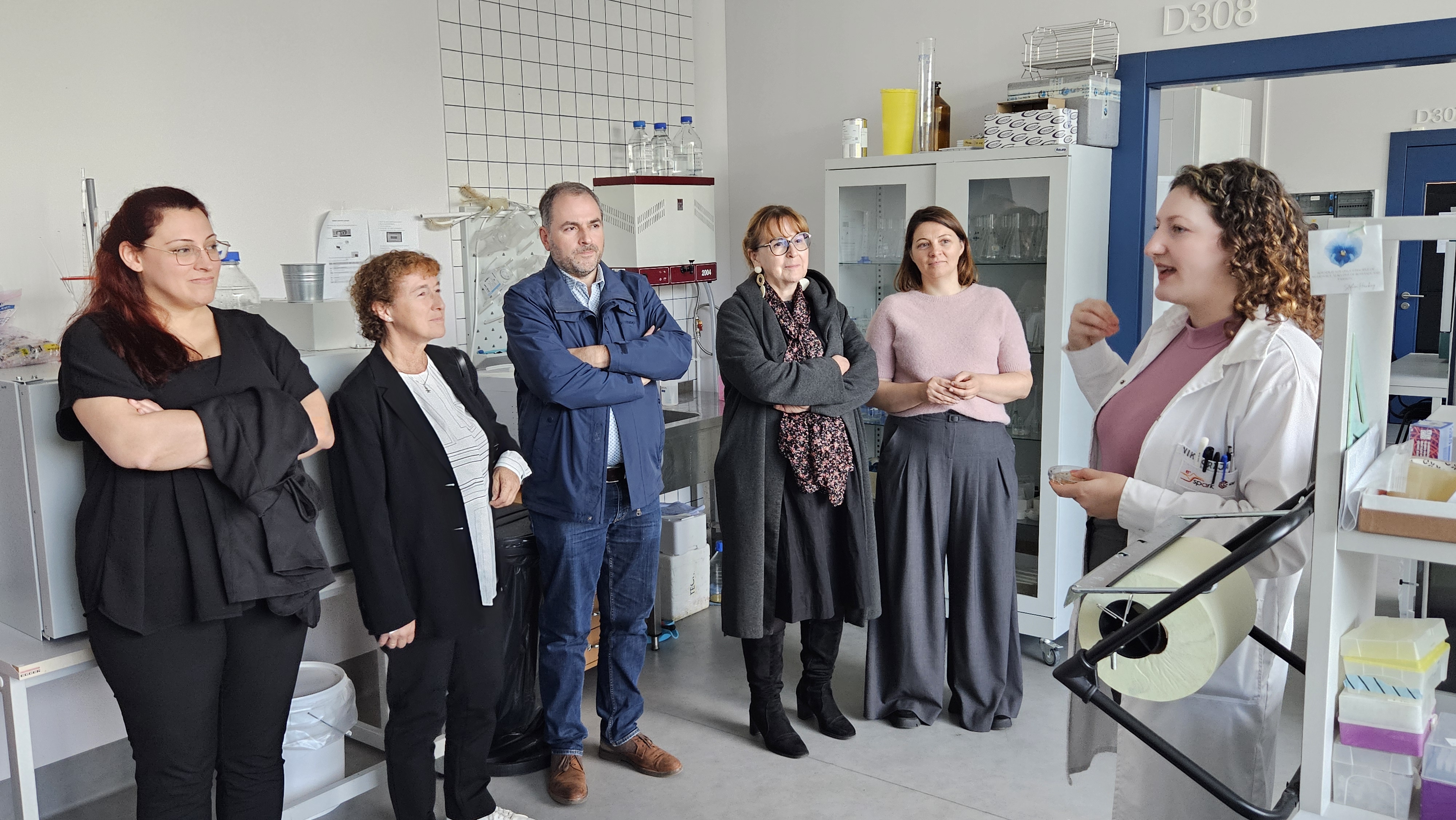
(PhD student Viktorija Reinikovaitė from the Bioelectrics Laboratory, Department of Functional Materials and Electronics at FTMC, with EARTO representatives and Rasa Kulvietienė, Director of RTO Lithuania (second from the right). Photo: FTMC)
During the meeting in Vilnius, a proposal was made to establish a subgroup focusing on the commercialization of these technologies and on the creation of start-ups and their introduction to production. Experts pointed out that the main obstacle in Europe is that each country has its own separate system, which differs greatly from the others, meaning the first step should be harmonization.
It was also noted that the majority of healthcare technology innovations are created in north-western Europe, while the fewest come from south-eastern Europe. One of the main reasons for this is differences in bureaucratic regulations: in the south they are much stricter, often discouraging researchers from pursuing projects, or resulting in very long delays in obtaining the necessary approvals.
The meeting was attended in person by 9 Working Group representatives and 22 more joined remotely. Among the guests were also four core members of the group. The Head of this WG is Dr Dirk Holste from the Austrian Institute of Technology (AIT) in Vienna. In total, representatives came to Vilnius from the following RTO institutions: IMEC (Belgium), Tecnalia (Spain), CEA (France), Metrosert (Estonia), VTT (Finland), the Tyndall National Institute (Ireland), and FTMC (Lithuania).
The guests were welcomed by Rasa Kulvietienė, Director of RTO Lithuania, which unites FTMC, the Lithuanian Energy Institute (LEI), and the Lithuanian Research Centre for Agriculture and Forestry (LAMMC).
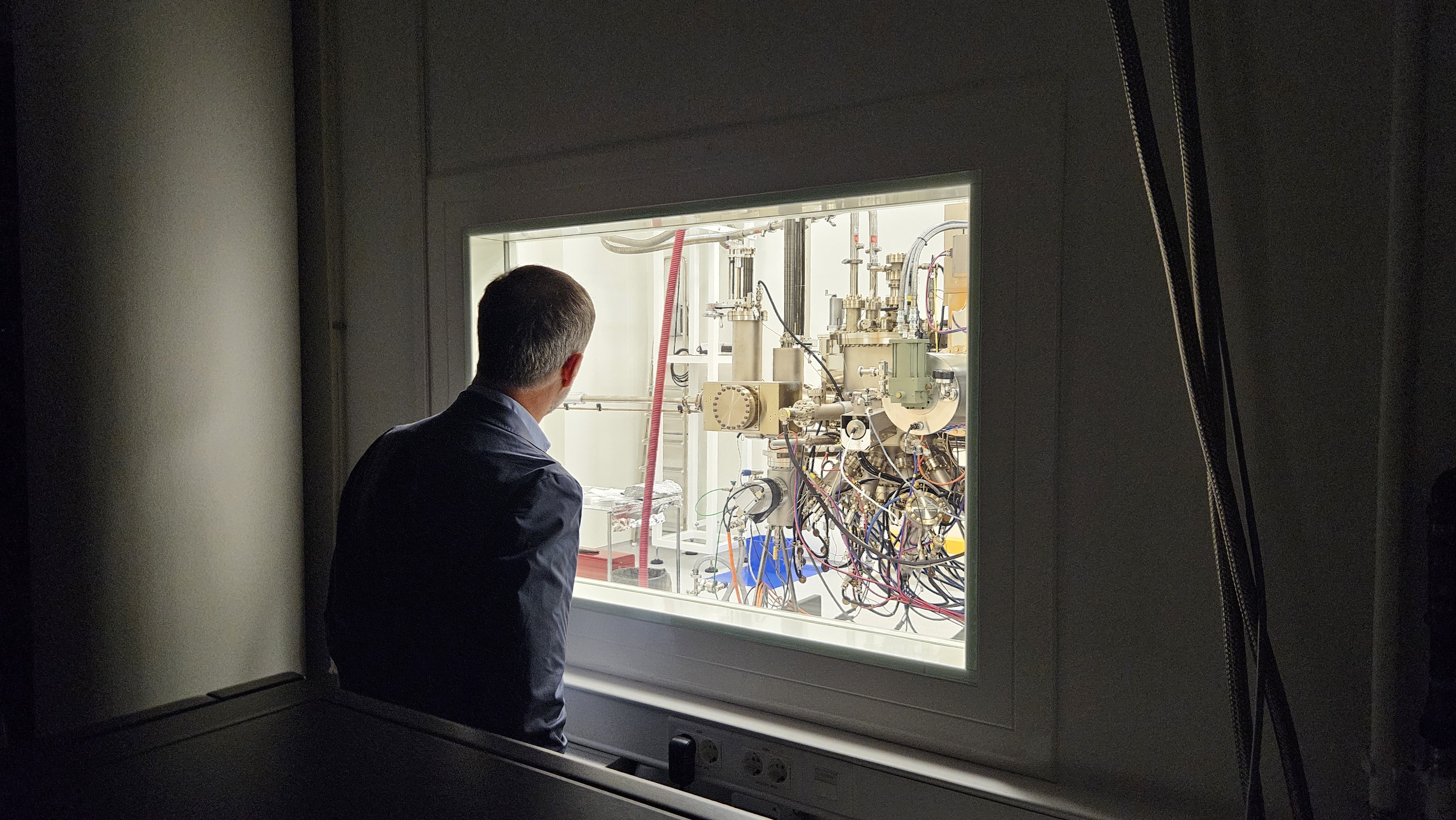
(Dr Dirk Holste, Head of the EARTO WG Emerging Technologies for Healthcare, takes a look at the Molecular Beam Epitaxy (MBE) equipment. Photo: FTMC)
At the end of the sessions, EARTO representatives visited several FTMC laboratories where relevant health technology research is carried out. It was presented by Dr Vincentas Mindaugas Mačiulis, chemist at the Bioanalysis Laboratory of the Department of Nanotechnology, PhD student Viktorija Reinikovaitė from the Bioelectrics Laboratory of the Department of Functional Materials and Electronics, and physicist Dr Renata Butkutė from the Photonic Technologies and Devices Laboratory of the Department of Optoelectronics.
“The idea of holding these meetings at different RTOs is to become familiar with the research carried out in each organization (this time at FTMC) and to strengthen ties for potential partnerships in international project networks,” says Dr Pauliukaitė. According to her, the guests were pleasantly surprised by the level and diversity of research conducted at FTMC and left with a very positive impression.
Info: FTMC