- Home
- News & Events
- News
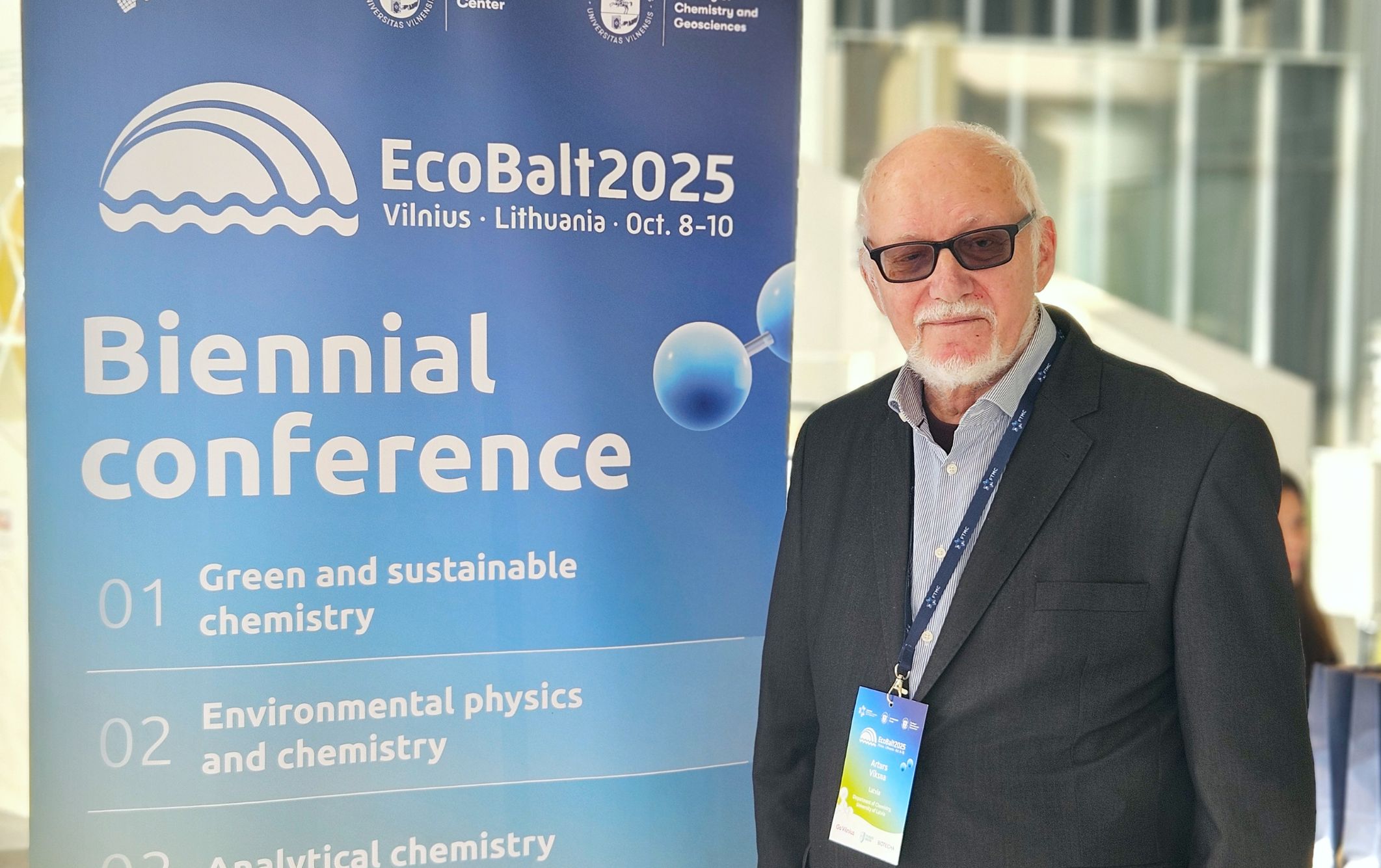
EcoBalt 2025: How Latvian Professor Arturs Viksna Is Helping Beekeepers
The international conference EcoBalt 2025 continues in Vilnius, bringing together over a hundred scientists from the Baltic States and other countries to present their latest research findings.
One of the invited speakers is Professor Arturs Viksna from the University of Latvia. A distinguished chemist, Prof. Viksna has authored more than 150 scientific papers and contributed to significant studies related to honey. Together with his colleagues, he has investigated the geographical and botanical origins of Latvian honey, potential contamination sources, and specific pollen indicators. His work benefits not only beekeepers but also medical researchers, as the properties of high-quality honey are attracting growing attention in the field of health sciences.
Presenting his research at the conference, Prof. Viksna reminded the audience that honey is among the most frequently adulterated food products in the world — often diluted with sugar syrups or falsely labelled in terms of its origin and type. According to the Latvian professor, it is essential to ensure that the honey we consume is genuine and pure — primarily to guarantee fair earnings for honest beekeepers, to protect consumers from fraud, and to prevent the market from being distorted by cheap, poor-quality honey imported from third countries.
“The price varies a lot. For example, Manuka honey costs around 29 euros, while Chinese honey is only about 1.25 euros — a huge difference,” the researcher notes.
(Photo: FTMC)
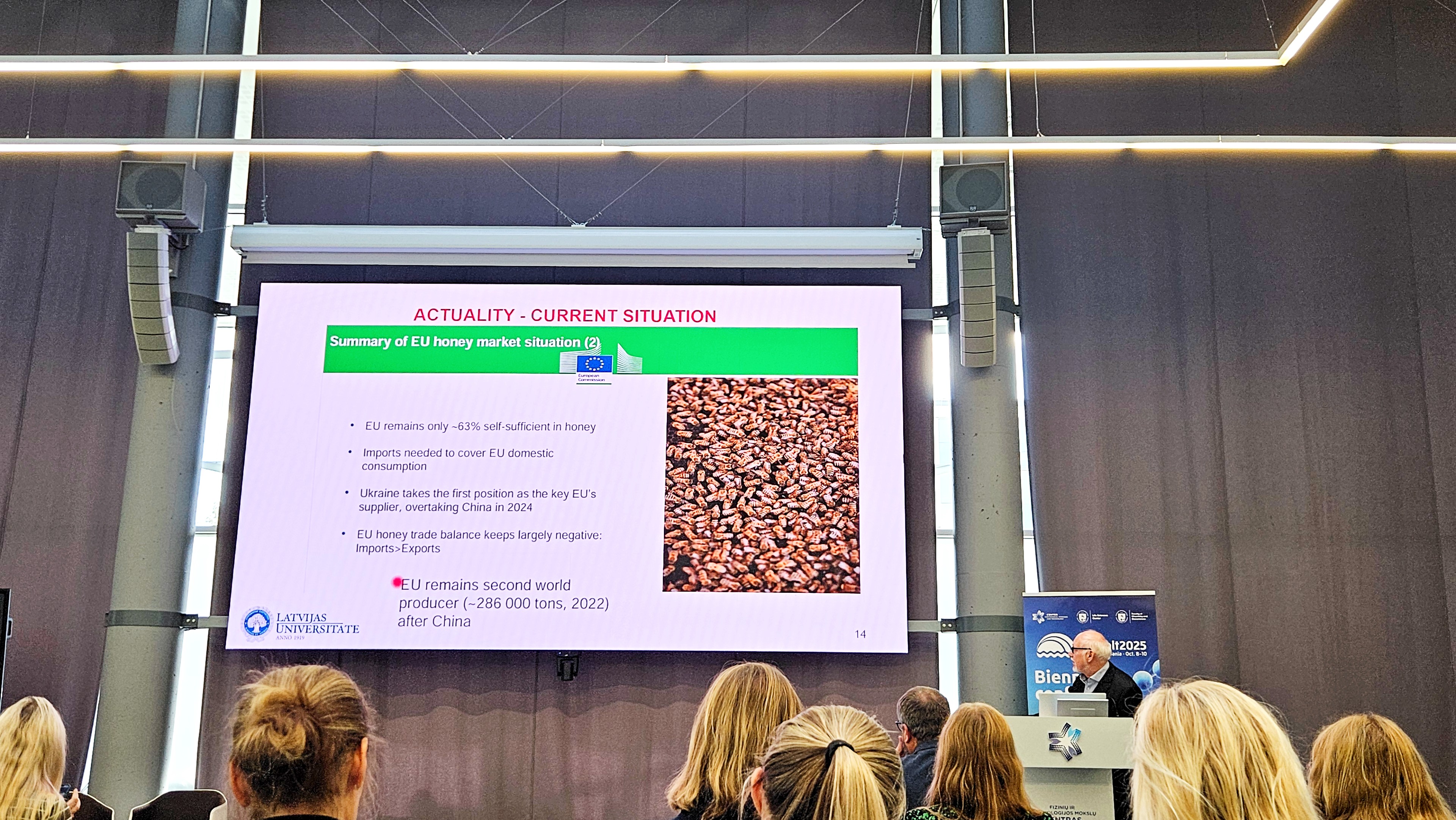
In his presentation, Prof. Viksna also highlighted that the European Union produces only about 63% of its internal honey demand, and exports from the EU are significantly lower than imports.
“Also, for medical studies, it’s very important to use high-quality monofloral honey, especially, especially when identifying potentially bioactive beneficial compounds,” says Prof. Viksna.
At this point, we encounter a few perhaps unfamiliar terms — monofloral and polyfloral honey. Monofloral honey is produced mainly from the nectar or pollen of a single plant species — for example, linden, buckwheat, rapeseed, or dandelion. This type of honey is relatively rare and more expensive. In contrast, polyfloral honey is collected from a wide variety of plants — such as forest or meadow honey.
Monofloral honey is traditionally more valued in medicine and scientific research, as it is chemically more consistent, being derived from a single plant species. However, Prof. Viksna points out that the benefits of different types of honey may depend on the specific scientific purpose.
(Photo: Unsplash.com)
Together with colleagues from the Department of Analytical Chemistry at the University of Latvia, the renowned scientist applies pollen analysis for various studies — extracting pollen particles from honey to determine from which plants they were collected by bees. His presentation emphasized that this approach helps identify the true type of honey — since producers may claim to sell pure, monofloral honey, whereas analysis sometimes reveals the presence of pollen from numerous other plant species.
“I think our research is very important for beekeepers. It’s not an easy job to produce monofloral honey and to get a higher price on the market. Moreover, if we have such analysis methods, we can detect different element traces in honey and help the beekeepers.
I also believe we will continue with the medical applications — probably developing some bandages or medicinal gels for wound healing,” explains Prof. Viksna.
Written by Simonas Bendžius