- Home
- News & Events
- News
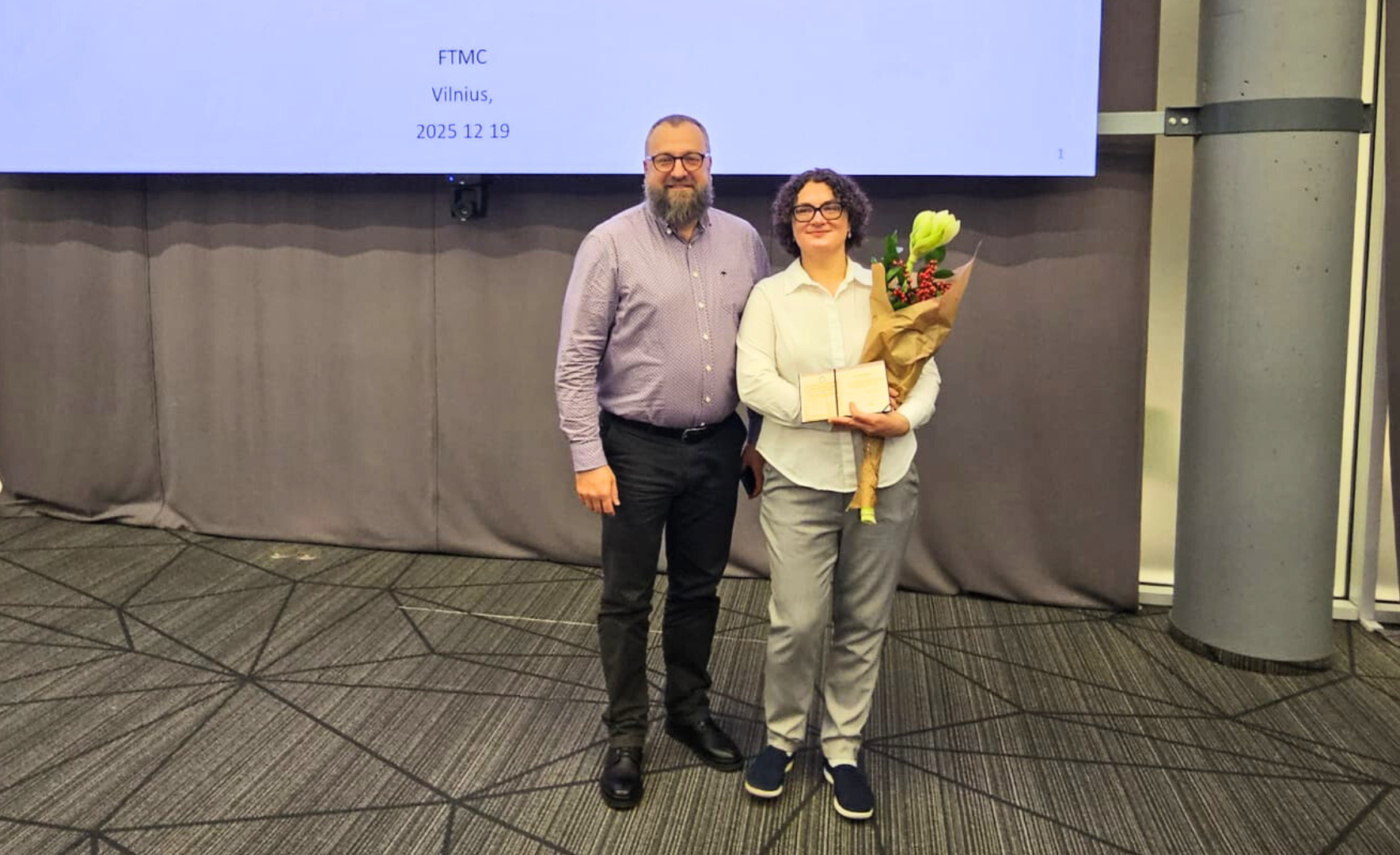
From Lighter Implants to More Advanced Organs-on-Chips: FTMC Chemist Neringa Bakutė Defends Her PhD Thesis
Just before Christmas, Neringa Bakutė, a chemist at the FTMC Department of Functional Materials and Electronics, gave herself a wonderful gift – on 19 December she successfully defended her PhD thesis entitled “Biomaterials Research in the Field of Biocompatibility, Cell Adhesion, and Applications in Microfluidic Systems” (academic supervisor: Dr Arūnas Stirkė).
Neringa’s research is relevant to all of us, as it focuses on next-generation orthopaedic implants and so-called organs-on-chips, which make it easier to study diseases and develop new medicines.
All of this research relies on biomaterials – substances specifically engineered to interact with with the human body, cells or tissues. Biomaterials are used for a medical purpose – either a therapeutic (treat, augment, repair, or replace a tissue function of the body) or a diagnostic one.
Put simply, these are “smart” materials used to make implants, artificial joints, vascular grafts, heart valves or surfaces on which cells are grown in the laboratory. Most importantly, they must be safe for the body and behave appropriately in each specific application.
Accordingly, Bakutė’s PhD research focused on finding ways to improve biomaterials and adapt them for medical use and cell-based studies.
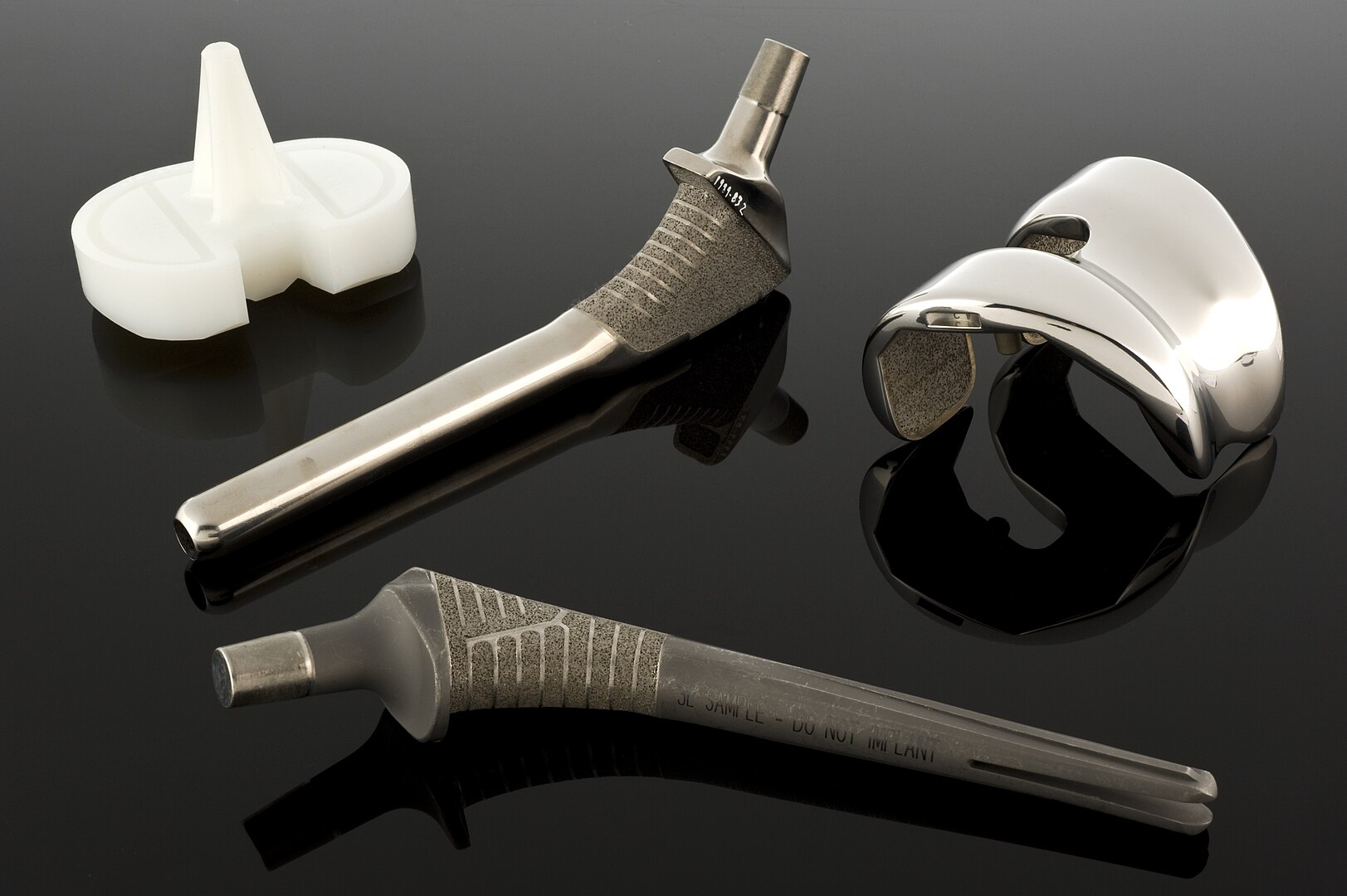
(One example of the use of biomaterials, photographed back in 1998. Made from titanium alloy, this prosthetic (shown in the centre) is used to replace worn out, damaged or diseased hip joints. Joint replacements and implants are made from materials such as titanium that are not recognised by the human body (so they will not be attacked by the immune system and rejected). Photo: Wikipedia.org)
The dissertation shows that targeted surface modification of materials can be used to improve their interaction with cells. Two different biomaterials were investigated. The first was an aluminium alloy with a bioceramic coating, assessed for its potential to become a safe and durable material for orthopaedic implants.
“The best results were obtained with an alloy anodised in sulphuric acid. The resulting coating matched – and in some cases even exceeded – the hardness, corrosion resistance and cell adhesion properties of titanium currently used in medicine. This suggests that future implants could be lighter, cheaper and easier to manufacture,” explains the FTMC researcher.
The second biomaterial studied was polycarbonate, which is widely used in biomedicine but is not inherently suitable for cell culture, especially in microsystems. However, surface modification significantly changed its properties, enabling stable cell growth both under static conditions and under fluid flow.
“This technology was applied in the development of a microphysiological system – an organ-on-a-chip platform that allows cell behaviour to be studied under conditions closely resembling those in the human body,” says Neringa.
“The benefits of this research may affect all of us: better implants mean safer and more comfortable treatment for patients, while more advanced organ-on-a-chip systems allow diseases to be studied and new medicines to be developed faster and more safely, reducing the need for animal testing. What is particularly gratifying is that in both cases we succeeded in creating surfaces that are biologically favourable and functional – both the implant coatings and the polycarbonate membranes demonstrated great potential for future medical technologies,” emphasises the newly awarded PhD.
Congratulations to our colleague and wishing her every success in continuing this important work!
Neringa Bakutė’s PhD thesis is available at the following link.
FTMC information