- Home
- News & Events
- News
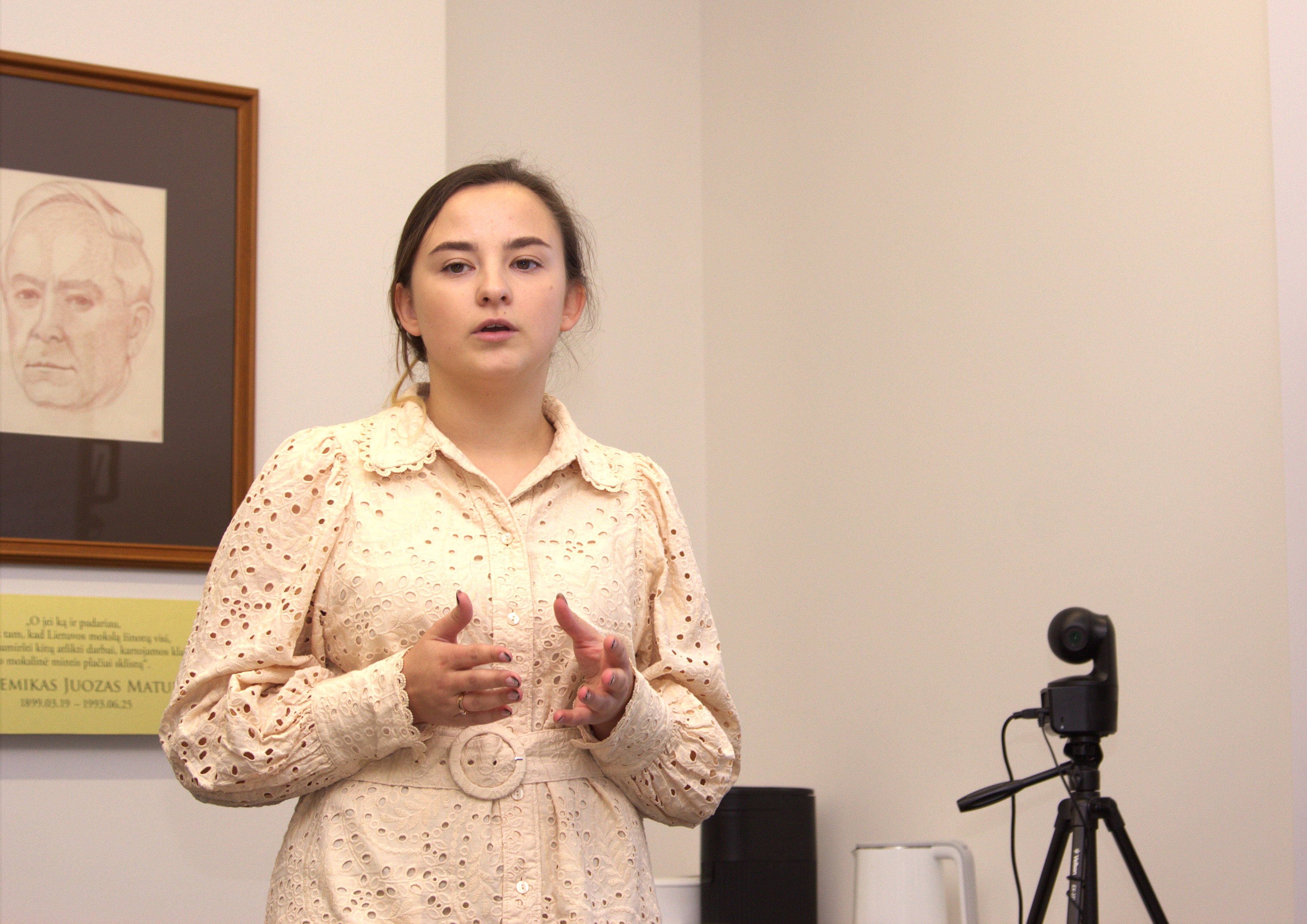
FTMC Chemist Virginija Ulevičienė Awarded PhD for Research into Biomass-Derived Catalysts for More Efficient Energy Generation
The FTMC Catalysis Department has a new Doctor of Natural Sciences. Chemist Virginija Ulevičienė has successfully defended her doctoral thesis entitled Carbon Catalysts Derived from Bio-Waste for Low-Temperature Fuel Cells (supervisor: Dr Loreta Tamašauskaitė-Tamašiūnienė).
As global energy demand continues to rise and efforts to reduce environmental pollution intensify, researchers are exploring new, efficient and sustainable energy generation technologies. One of the most promising approaches is fuel cells – devices that convert chemical energy directly into electricity. They work in a similar way to batteries, but can continue generating electricity as long as fuel is supplied.
Among these, direct hydrazine fuel cells are particularly noteworthy. They use hydrazine, a liquid compound consisting of nitrogen and hydrogen atoms. This technology is attractive because the reaction produces only nitrogen and water, meaning that no carbon dioxide is released. Furthermore, using hydrogen peroxide can increase the amount of energy generated by the fuel cell. However, the hydrazine reaction is relatively slow, making special materials known as catalysts essential. These accelerate the reaction and help the fuel cell operate more efficiently.
Precious metals such as platinum and palladium are commonly used in these catalysts, but they are expensive. This has prompted researchers to look for more affordable and sustainable alternatives. One possibility is carbon materials derived from biomass waste and enriched with nitrogen and transition metals such as nickel, copper or cobalt. These materials can offer good catalytic properties while being more environmentally friendly.
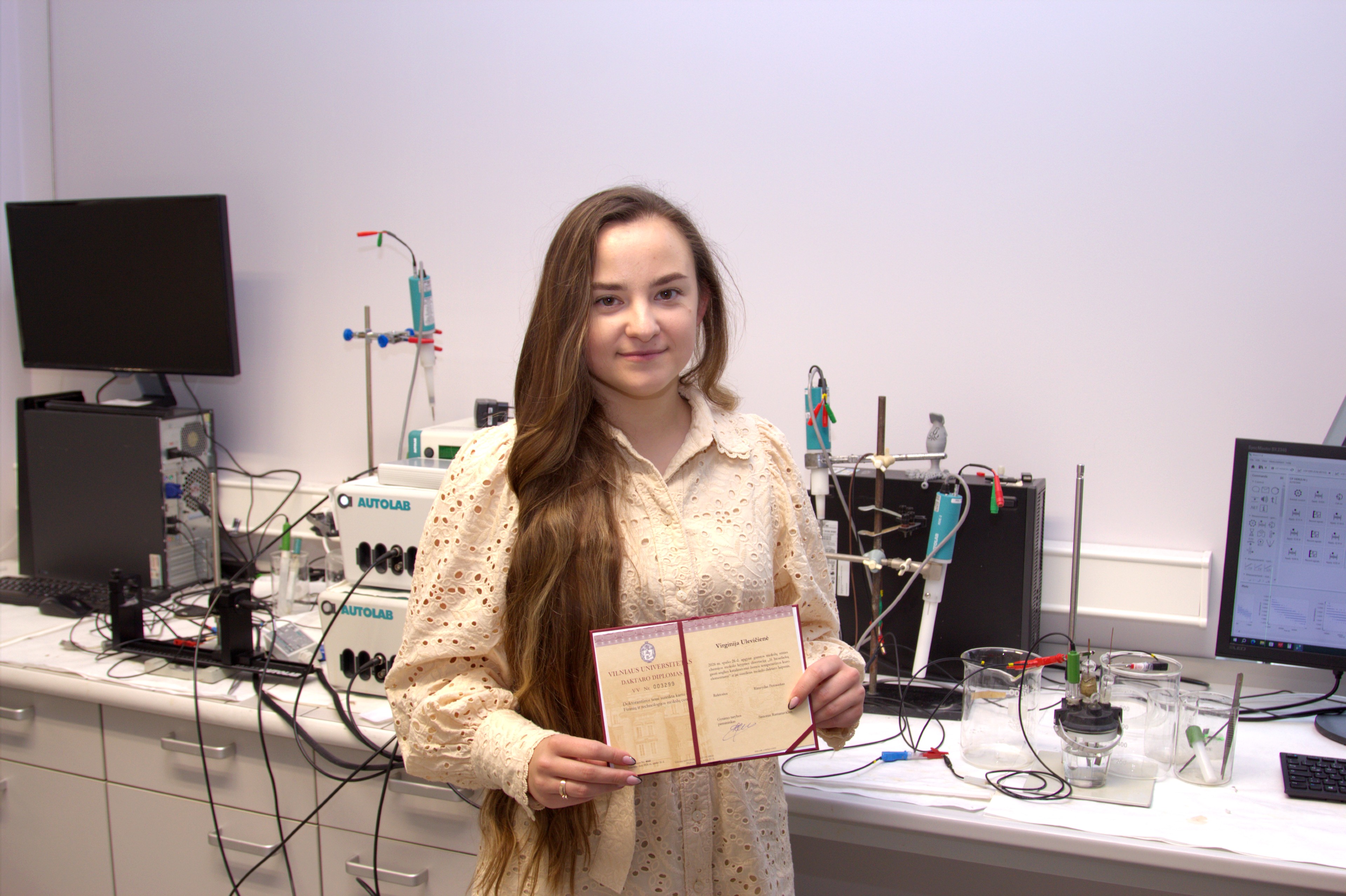
Dr Virginija Ulevičienė. Photo by Gabrielius Mackevičius / FTMC.
Although previous research has shown that these materials hold considerable promise, their performance in hydrazine fuel cells has not yet been sufficiently explored. This is the challenge Virginija set out to address.
“My research focused on developing and investigating nickel-, cobalt- and copper-containing catalysts based on activated carbon produced from wood waste, with the aim of improving the hydrazine oxidation reaction. In other words, I wanted to determine which catalyst compositions and properties make it possible to generate electricity more efficiently,” explains the FTMC researcher.
She notes that this research is important because it explores alternative ways of generating electricity and reducing dependence on fossil fuels. The principles of the circular economy are also central to this work, particularly cooperation between businesses. What one company considers a manufacturing waste product can become a valuable raw material for another. By sharing resources and finding ways to use industrial by-products, businesses can reduce the need for new raw materials, keep materials in circulation for longer and minimise waste.
“In my research, this principle is reflected in the use of wood waste to produce activated carbon, which is subsequently used to develop catalysts. The aim is therefore not only to achieve more efficient energy conversion, but also to make more sustainable use of the resources already available,” says V. Ulevičienė.
She successfully developed and experimentally investigated several different catalysts, identifying how their composition affects catalytic activity.
“I am particularly pleased that the cobalt-containing catalyst delivered the best results in my research. This suggests that selecting the right active material and ensuring its interaction with the carbon support can significantly improve the hydrazine oxidation reaction. I believe the most important achievement is not simply obtaining better results, but also gaining a deeper understanding of which catalyst properties determine their activity,” says the newly awarded Doctor of Natural Sciences.
FTMC information