- Home
- News & Events
- News
23 June, 2025
Fuel Cell Chemist Ramūnas Levinas Awarded LMA Young Scientist Scholarship
The Lithuanian Academy of Sciences (Lietuvos mokslų akademija, LMA) has awarded the Young Scientist Scholarships for 2025-2026 to the best young scientists in the country.
We are delighted to have a representative of our Center among this year's winners once again: in the category of Natural, Medical and Health, Agricultural and Technological Sciences, the scholarship was awarded to Dr Ramūnas Levinas, a chemist at the FTMC Department of Catalysis. His research topic is ‘Development and application of innovative catalytic materials in direct methanol fuel cells’.
Congratulations to our colleague – we are proud of you!
Methanol fuel cells are a very promising renewable energy option. These devices directly convert the methanol energy of liquid alcohol into electricity and have many advantages: they are very low-emission, quiet, efficient and easy to use (e.g. just add methanol to your car and you are ready to drive). Methanol fuel cells are therefore expected to replace conventional batteries and petroleum products in the near future.

(Dr Ramūnas Levinas. Photo from personal archive)
"These are fuel cells that feed methanol into the anode - one side of the cell - although other organic materials could also be suitable. At the anode, the methanol is chemically oxidised: electrons are stripped from the methanol and flow down an external circuit to create an electric current," explains Levinas.
In his ongoing research project, the LMA laureate is synthesising materials that could be applied to methanol fuel cell catalysts. The latter are designed to accelerate chemical reactions and consist of two parts - an anode and a cathode. The problem is that such catalysts have so far mainly used very expensive precious metals such as platinum or palladium. So Ramūnas and his colleagues are working on alternative materials that are cheaper but effective.
"Of course, you can't get away from precious metals altogether, because they still work better than other materials. So we are looking at improving catalysts that are essentially transition metal catalysts (such as nickel hydroxide or copper hydroxide) or other materials, and using very small amounts of precious metals, perhaps platinum, if necessary," says the FTMC scientist.

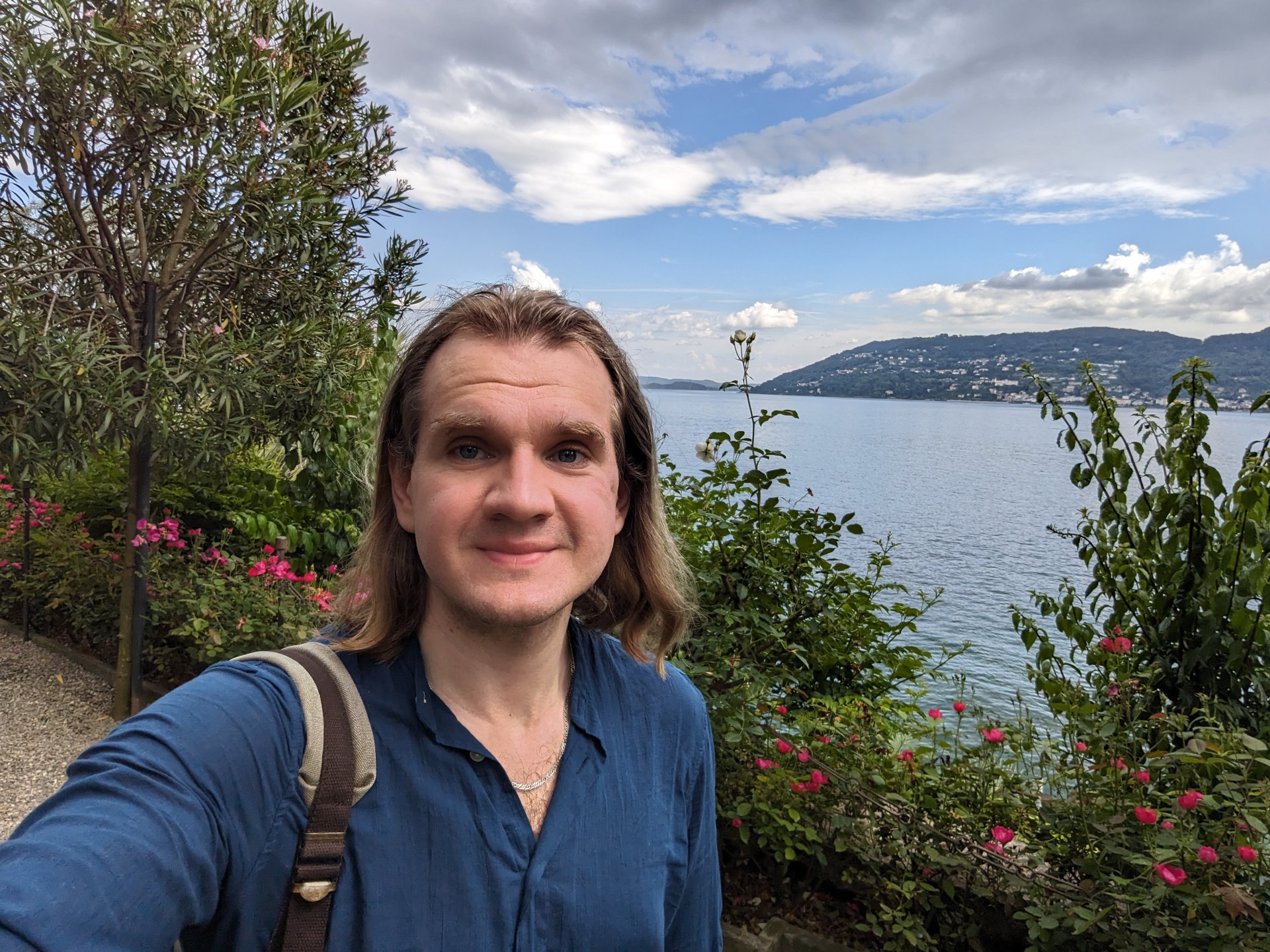
(Dr Ramūnas Levinas' spare time. Photo from personal archive)
After winning the LMA Young Scientist Scholarship, he would like to thank his colleagues at the FTMC Department of Catalysis - the Head of the Department, Dr Loreta Tamašauskaitė-Tamašiūnaitė, and the postdoctoral supervisor, Prof. Habil. Dr Eugenijus Norkus. ‘I hadn't thought much about fuel cells before, but working in this department has given me an idea of what they are and why they are needed - and how this can be linked to my background in electrochemistry,’ recalls Levinas.
He also thanks his former supervisors, Prof. Dr Henrikas Cesulis and Prof. Dr Natalia Tintaru of the Department of Physical Chemistry at Vilnius University.
Info: FTMC