- Home
- News & Events
- News
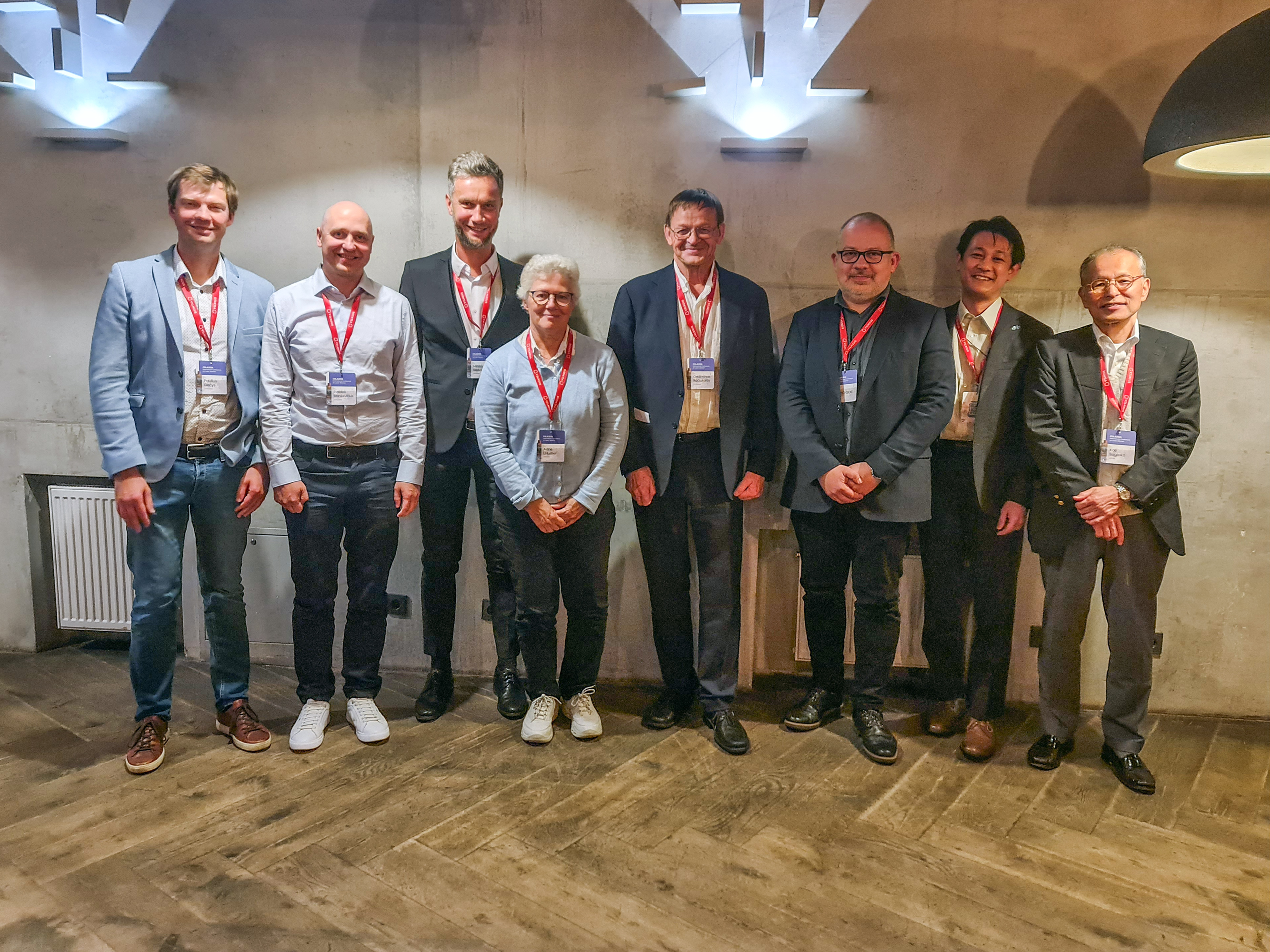
Meeting a Nobel Prize Laureate and the Promising Future of Laser Technologies: Prestigious COLA Conference Held in Vilnius
It would be difficult to imagine modern life without lasers, and these technologies continue to advance at a rapid pace. One of the most sophisticated methods is laser ablation, a process in which material is removed from a solid or liquid surface by exposing it to a highly concentrated laser beam.
Laser ablation is used across a wide range of fields, from medical procedures and microelectronics to the restoration of works of art. As the process enables material to be removed with micrometre or nanometre precision without damaging surrounding layers, it is indispensable wherever exceptionally high accuracy is required.
This topic was at the centre of the prestigious international Conference on Laser Ablation COLA 2026, held in Vilnius and co-organised by FTMC. Since 1991, the event has been held every two years on different continents and has become one of the leading conferences bringing together researchers from around the world working in laser materials processing and laser-matter interaction. The conference provides a platform for experts to discuss both the fundamental aspects of laser-matter interaction and specific applications of laser processing.
One of the members of the organising committee, Dr Paulius Gečys, Head of the FTMC Laser Microfabrication Laboratory, chaired a session dedicated to emerging and novel applications of laser ablation.
"Three areas stand out to me in particular: semiconductor dicing with minimal loss of valuable material, the fabrication of microscopic holes in glass for electronic interconnects, and the use of lasers to observe and control quantum vortex in superfluid helium.
The first two directions have very clear practical prospects, enabling more efficient manufacturing and more advanced electronics. The third is currently more focused on fundamental science, but what fascinates me is that the laser becomes a tool for exploring the otherwise inaccessible quantum world," says the scientist.
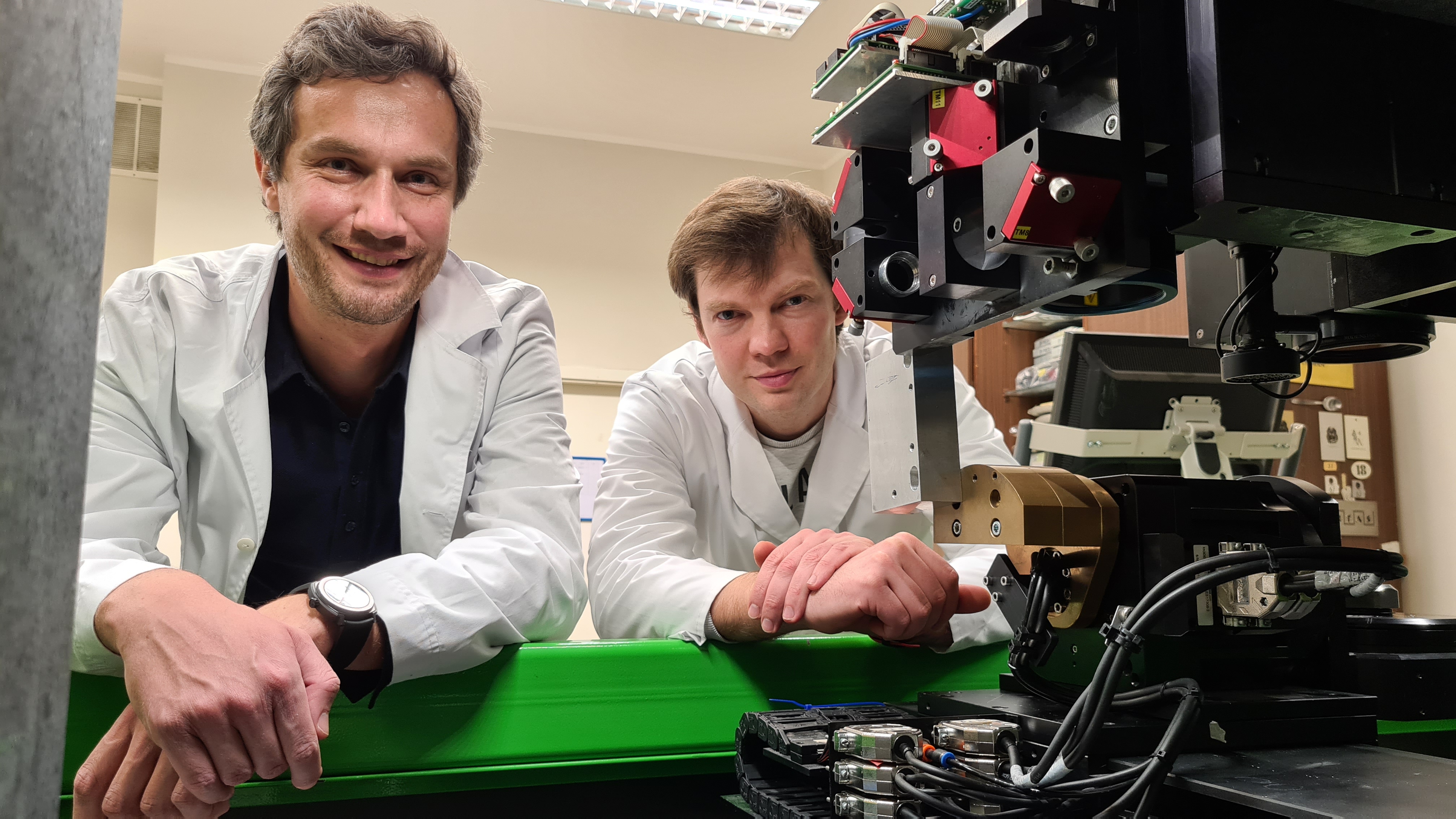
(Researchers at the FTMC Laser Microfabrication Laboratory of the FTMC Department of Laser Technologies: Dr Mindaugas Gedvilas and the Head of the Laboratory, Dr Paulius Gečys)
A special guest at the conference was Nobel Prize laureate Anne L’Huillier, French physicist and Professor at Lund University, who is widely recognised as one of the pioneers of attosecond physics. She delivered a lecture and shared insights with researchers attending from Lithuania and abroad.
"The work of Professor L’Huillier and her colleagues has made it possible to observe electron motion in matter using extremely short light pulses. Put simply, they helped uncover the very first moments of interaction between light and matter.
For my own work, this is important primarily from a fundamental perspective. In laser microfabrication, we seek to understand how materials absorb laser energy and what determines their removal or modification. Although the path from attosecond physics experiments to industrial applications is not a direct one, a deeper understanding of these processes helps us develop more precise processing techniques," notes Dr Gečys.
Source: FTMC