- Home
- News & Events
- News
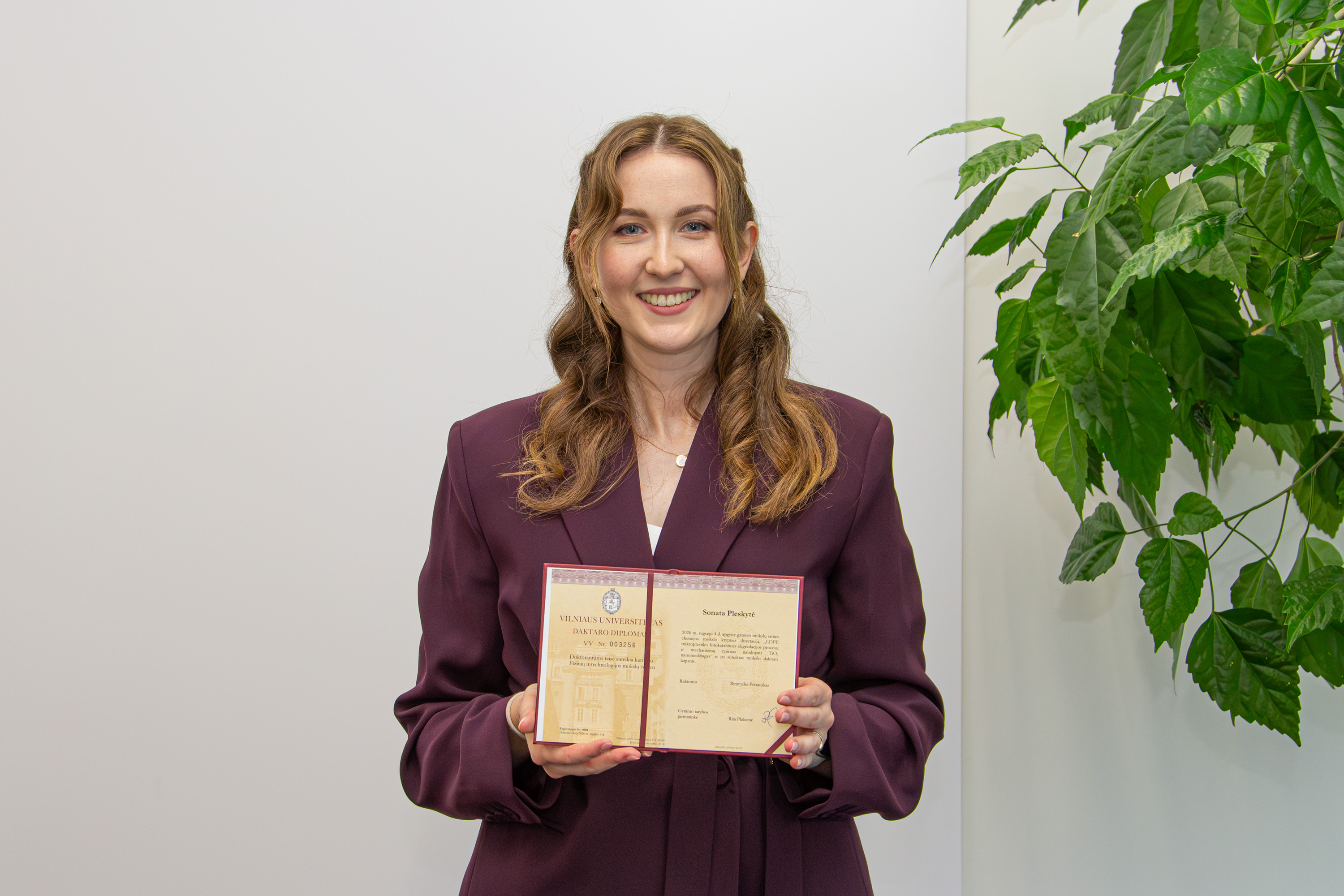
New Solutions for Reducing Microplastic Pollution: FTMC Chemist Sonata Pleskytė Earns a PhD in Natural Sciences
Microplastics are a growing global problem. Scientists estimate that by 2060 the amount of plastic waste could reach one billion tonnes. This pollution is particularly concerning because plastics gradually break down in the environment into smaller particles known as microplastics, which have already been detected in a wide range of ecosystems and living organisms. Although their full impact has not yet been established, research to date suggests that microplastics may damage tissues, trigger inflammatory processes, disrupt bodily functions, and otherwise pose risks to human health.
Scientists around the world, including in Lithuania, are working to address the challenge of microplastic pollution. Among them is FTMC Department of Environmental Research chemist Sonata Pleskytė, who has successfully defended her doctoral thesis, “Investigation of Photocatalytic Degradation Processes and Mechanisms of LDPE Microplastics Using TiO2-based Nanomaterials” (supervisors: Dr Ieva Uogintė and Dr Steigvilė Byčenkienė).
The research focuses on the photocatalytic degradation of low-density polyethylene (LDPE), in other words, the breakdown of LDPE microplastics with the aid of light. LDPE is one of the most widely used types of plastic, particularly in agriculture, where LDPE mulch films are considered one of the major sources of agricultural plastic waste. As part of her research, Dr Pleskytė investigated both the efficiency and mechanisms of LDPE degradation, using titanium dioxide (TiO₂) nanomaterials developed in the laboratory to accelerate the process.
“The main objective of this research is the reduction of microplastic pollution. We chose to apply photocatalytic degradation of microplastics in an aqueous environment because this process not only enables extremely small microplastic particles to be captured and retained but also allows them to be broken down into the final reaction products, water and carbon dioxide.
During the photocatalytic degradation experiments, we used UV-A radiation, which is close to the visible light spectrum, together with different TiO₂-based catalysts, including TiO₂-clay nanocomposites and Ag-TiO₂ nanomaterials. When exposed to light, the catalyst becomes active and generates reactive oxygen species, which begin to break down microplastic molecules by severing the bonds between carbon atoms,” explains Sonata.
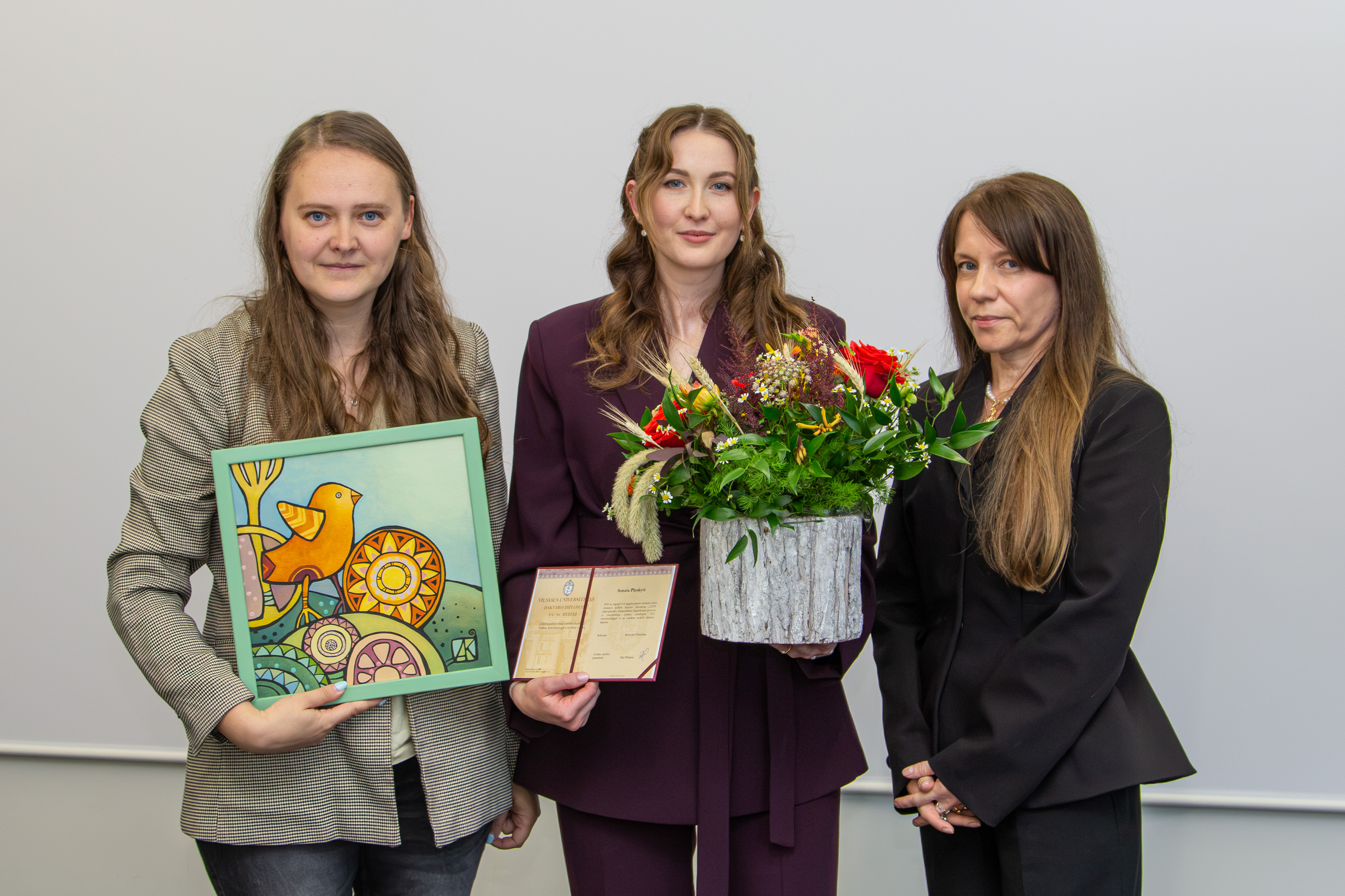
(The new PhD with her supervisors. From left to right: Dr Ieva Uogintė, Dr Sonata Pleskytė, and Dr Steigvilė Byčenkienė. Photo: Gabrielius Mackevičius / FTMC)
The researcher is pleased that the project not only investigated laboratory-grade LDPE microplastic particles but also successfully worked with commercially available LDPE films used by farmers. Her findings revealed that physical properties such as the colour and size of microplastic particles can significantly influence how effectively they degrade.
“We found that black LDPE films degraded twice as efficiently as transparent ones. We also demonstrated that smaller LDPE film samples (1 × 1 mm) degraded one and a half times more efficiently than larger samples measuring 3 × 3 mm. These results highlight the importance of studying ‘real-world’ microplastics to bridge the gap between laboratory research and practical applications, particularly given the abundance and diversity of microplastics entering the environment,” says Dr Pleskytė.
According to the newly graduated Doctor of Natural Sciences, the relevance of this research extends far beyond the laboratory and concerns all of us more closely than might appear at first glance:
“The photocatalytic degradation of microplastic particles could be integrated into wastewater treatment facilities, helping to reduce microplastic pollution in the environment while also protecting ecosystems from the entry of these particles into the food chain and their potential adverse effects on the health of living organisms.”
Sonata’s doctoral thesis can be accessed via this link.
Source: FTMC