- Home
- News & Events
- News
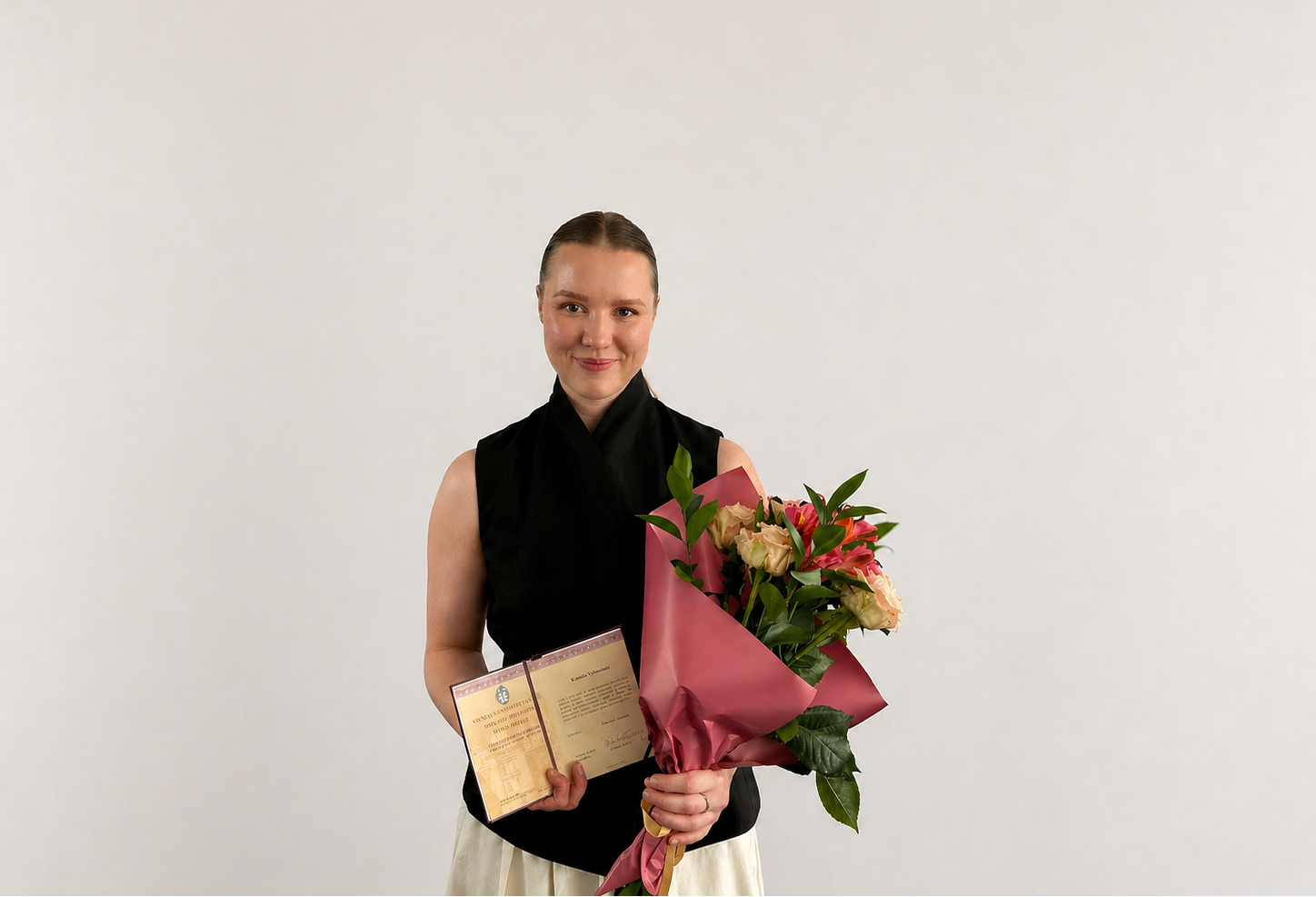
Tiny Microalgae, Big Benefits: FTMC Physicist Kamilė Jonynaitė Defends Her PhD
Microalgae are microscopic, single-celled organisms – among the oldest forms of life on Earth – found in virtually all aquatic environments. Like plants, they carry out photosynthesis and therefore produce the oxygen essential for all of us.
However, their benefits do not stop there. For more than 50 years, microalgae have been studied in laboratories and are now used in food supplements, cosmetics, animal feed, biofuel production, and water treatment. They can be a source of proteins, pigments, omega fatty acids and other valuable compounds.
Lithuanian researchers are also experimenting with microalgae – among them scientists from the FTMC Department of Functional Materials and Electronics. One of them, Kamilė Jonynaitė, was awarded a PhD in Natural Sciences on 30 April. She successfully defended her doctoral thesis entitled “Pulsed Electric Field Effects Across Biological Scales: From Photosynthetic System Functioning to Microbial Community Dynamics in Chlorella vulgaris Systems” (academic supervisor: Dr Arūnas Stirkė).
Warmest congratulations to our colleague, and every success in continuing this important work!
In her dissertation, Kamilė investigates how pulsed electric field (PEF) affect cells of the microalga Chlorella vulgaris. PEF consists of very short bursts of electricity used to “stimulate” microalgae in order to induce desired properties. “PEF affects the cell membrane, where temporary or longer-lasting pores can form. Through these pores, various substances can move into or out of the cell. If the treatment is mild, the membrane can recover; if it is stronger, the cell may be irreversibly damaged. This makes PEF a tool that allows very precise control over the extent of cellular impact,” says Jonynaitė.
Such experiments are carried out to enable the release of valuable compounds from cells through the pores that form. According to Kamilė, chemical, thermal or mechanical methods are typically used for this purpose, but they can require large amounts of energy, additional chemicals, or cause severe damage to the biomass.
“By contrast, PEF technology offers a more precise and cleaner alternative. A short electrical pulse creates pores in the cell membrane, allowing valuable substances to leave the cell more easily. With properly selected treatment conditions, it is possible to reduce the need for chemicals, lower energy consumption and better preserve sensitive compounds.
These studies contribute to the development of more sustainable biotechnologies. By better understanding how microalgae respond to electrical pulses, we can make more efficient use of their biomass in the food, health, cosmetics, energy, and environmental sectors,” explains the FTMC researcher.
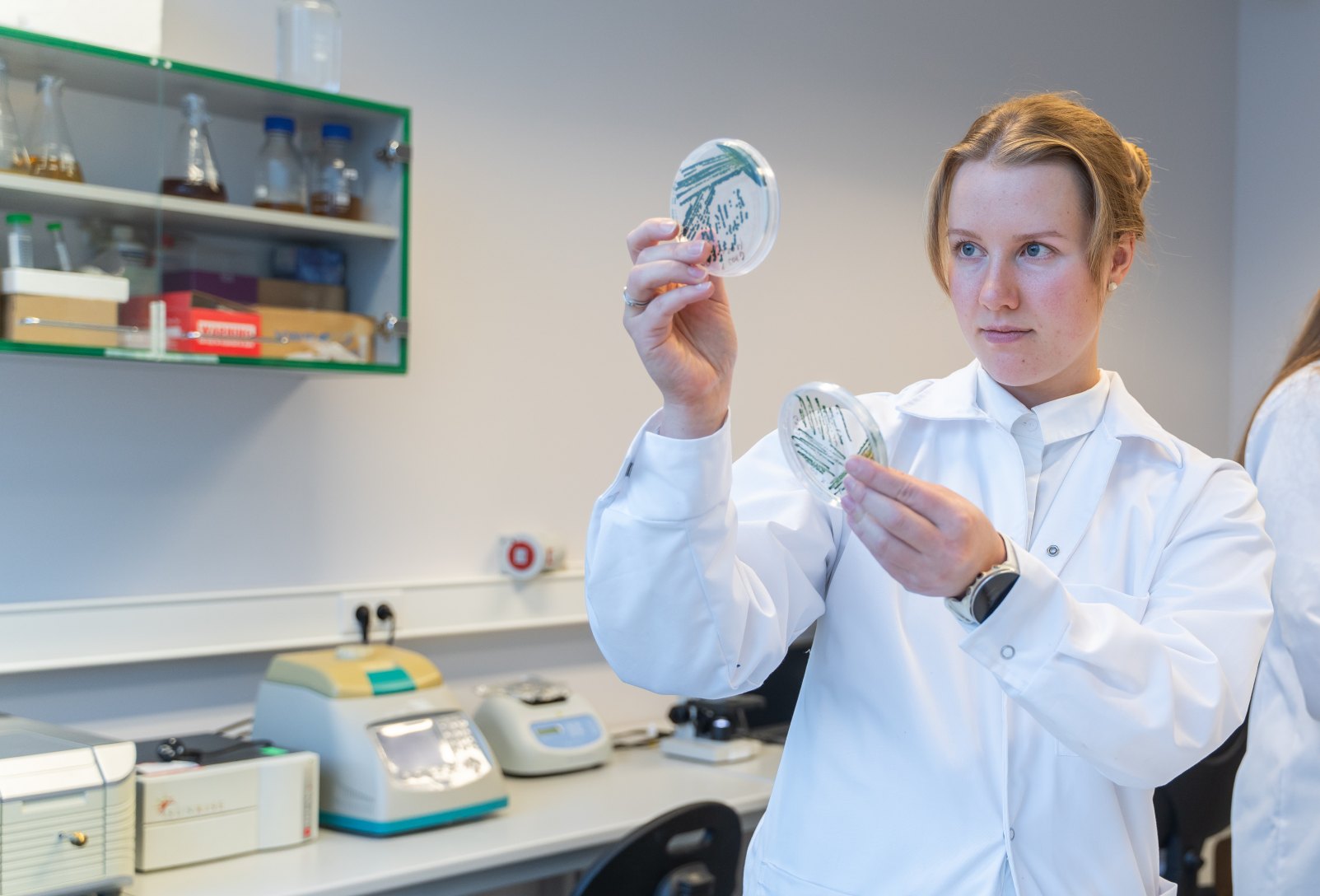
“In my dissertation, I investigated the effects of PEF on microalgae at several levels of biological organisation: internal cellular structures, the whole cell, and communities of microalgae and bacteria. This approach makes it possible to understand not only what happens at the membrane itself, but also how these changes are reflected in overall cell function and in the broader microbial community.
The main aim of the work was to determine how different electrical pulse parameters shape the response of microalgae and how this knowledge could be applied in more sustainable biotechnologies,” the physicist notes.
The result that brings her the greatest satisfaction is the successful integration of different levels of analysis into a single coherent picture. In her dissertation, Kamilė demonstrates how the impact of electrical pulses on the membrane is linked to changes inside the cell, overall cell viability, and the response of the wider microbial community.
“Experiments with communities of microalgae and bacteria were particularly important. They showed that a cell’s sensitivity to electrical pulses depends not only on its own properties, but also on the environment in which it lives.
In other words, microorganisms respond to technological interventions not as isolated individual cells, but as part of complex communities. I believe this is important both for further research and for practical applications, as in real biotechnological systems microorganisms most often coexist with other species,” says the newly qualified PhD.
Her dissertation can be accessed via this link.