- Home
- News & Events
- News
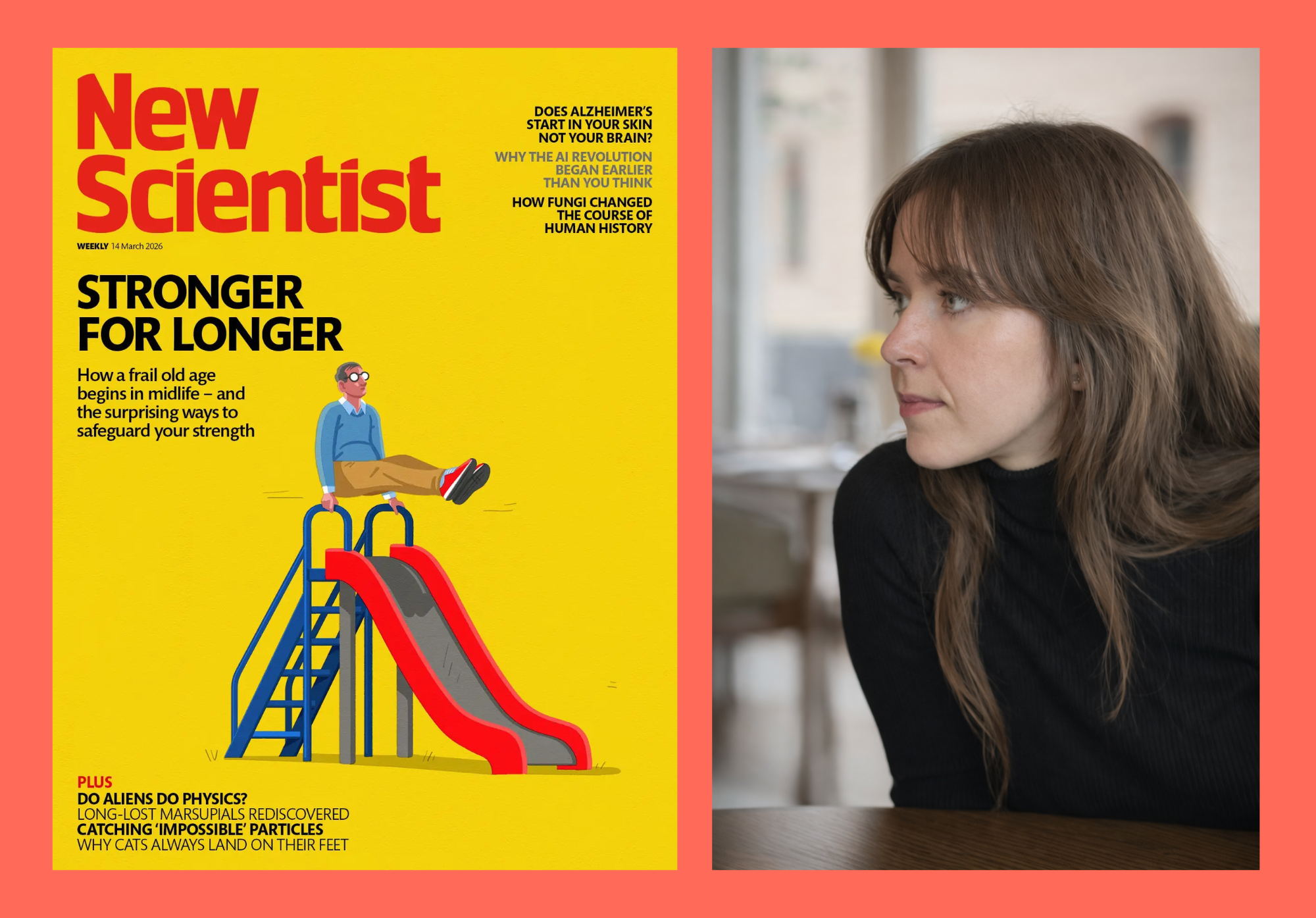
Tracing Ancient Mushrooms: FTMC PhD Candidate Justina Stonytė in New Scientist
The The world’s most popular weekly science and technology magazine New Scientist, founded in London, has published an article exploring how our ancestors, by eating mushrooms and using them for other purposes, helped shape the course of history.
The article explains that for many years scientists were unable to determine whether prehistoric humans consumed mushrooms. Because mushrooms consist largely of water, they decompose rapidly and are therefore rarely preserved as fossils. However, recent advances in analytical techniques have finally made it possible to identify mushroom DNA and microscopic residues in the mouths of our ancestors, as well as on tools, vessels and clothing. These discoveries have revealed new and unexpected insights into how mushrooms helped humanity survive and may even have contributed to the development of modern civilisation.
The article features researchers from various scientific institutions around the world, including Justina Stonytė, a PhD candidate at the FTMC Department of Nanotechnology. Working in collaboration with the FTMC Department of Nuclear Research, she is searching for traces of mushrooms in the everyday lives of Stone Age people.
“Through my research, I aim to understand whether and how our ancestors may have used mushrooms. Unfortunately, direct evidence is usually not preserved, as mushrooms decompose very quickly. That is why we are looking for invisible chemical traces they may have left behind.
One possible approach is stable isotope analysis. Isotopes act like chemical ‘fingerprints’, helping to reconstruct diet and environment by distinguishing whether certain substances originate from plants, animals or marine sources. We are currently trying to identify a specific mushroom signal within these data, but so far isotope analysis alone is not sufficient.
For this reason, I combine several additional methods in my research: I develop electrochemical sensors capable of detecting extremely small biological traces, and I apply genetic techniques to search for fungal DNA. By bringing these methods together, we can begin to see what has so far been invisible in archaeology and gain a better understanding of the long-forgotten relationship between humans and mushrooms in the past,” says Stonytė.
The original New Scientist article (behind a paywall) is available here.
A Lithuanian translation of the article can be read on the Lrytas news website here.