- Home
- News & Events
- News
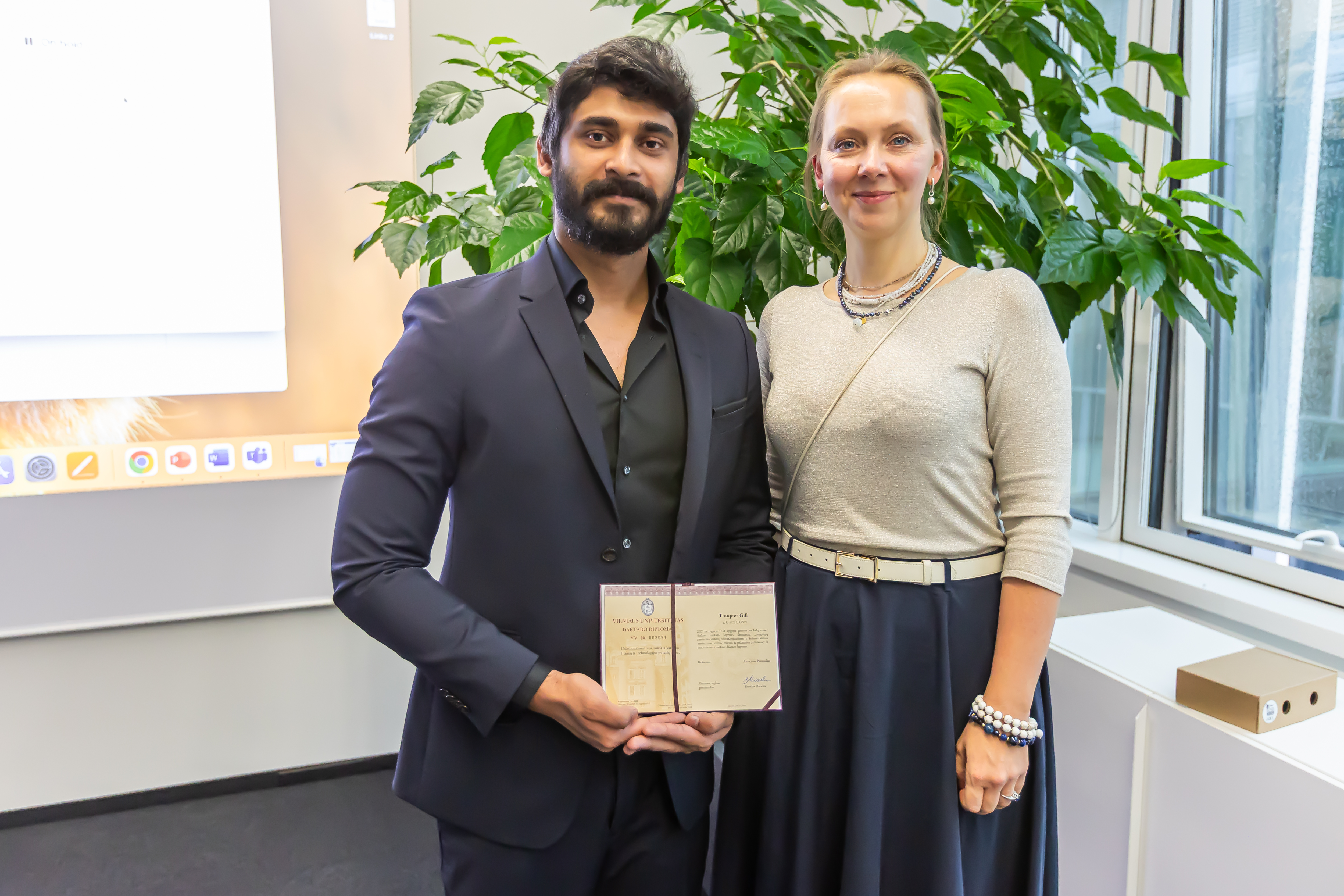
Touqeer Gill, Who Studies Harmful Aerosols, Defended His PhD
FTMC has another new PhD! On September 16, Touqeer Gill, a physicist from the Department of Environmental Research, became one.
The topic of his thesis is relevant to each and every one of us – “Characterization and Source Apportionment of Carbonaceous Aerosol in Rural, Urban and Coastal Environments“ (academic supervisor: Dr Kristina Plauškaitė-Šukienė).
Congratulations to our colleague, and we wish him continued success in his important research!
This dissertation focuses on the chemical characterization and source apportionment of carbonaceous aerosols in rural, urban, and coastal environments of Northern Europe (Lithuania) and South Asia (Philippines).
As scientists have observed, aerosols invisible to the naked eye have a significant and comprehensive impact on the Earth's climate system. Increased concentrations of these particles have a marked effect on local meteorological conditions and atmospheric air quality in various regions of the planet. To better understand the weather and climate, we need to know what aerosol particles are made of, where they come from, how they change, and how they affect the Earth's climate. Touqeer's dissertation is a significant contribution to the study of these topics.
Gill investigated the relative contributions of fossil fuel combustion, biomass burning, and other anthropogenic sources to aerosol composition, with particular emphasis on black and brown carbon, and their implications for regional air quality and climate.
.jpg)
(Photo: Canva.com)
“The results demonstrate that organic aerosols constitute the dominant fraction of submicron particulate matter (53–80%) across all environments studied. Black carbon (soot) from fossil fuel combustion and traffic was identified as the principal source (80–90%), whereas biomass burning contributed a smaller share (10–20%). Brown carbon accounted for only 14–22% of carbonaceous aerosol.
Notably, although absolute black carbon concentrations in South Asia were 14–15 times higher than in Northern Europe, the relative source contributions remained comparable, underscoring a consistent pattern of emission dominance across distinct climatic and socioeconomic contexts,“ explains Touqeer.
According to scientist, the findings provide new insights into the regional and global dynamics of aerosol pollution, which has profound implications for both human health and climate forcing:
“By clarifying the dominant sources of black carbon (BC) and brown carbon (BrC) in contrasting environments, this research supports the development of evidence-based mitigation strategies aimed at reducing harmful emissions, improving air quality, and informing international climate policy.“
The dissertation can be read by clicking on this link.
Info: FTMC